
Are light bars illegal?
By Chad Sig · Published
The short answer
A light bar is legal to own and to fit, and in most of the United States it is not legal to switch on while driving on a public road. No federal rule approves or bans one; the lamps you add are governed by the state you drive in. Those states allow a small number of auxiliary driving and fog lamps inside height windows that a roof or windshield bar sits far above, and several cap how many bright lamps may be lit at once. California is the clearest case: its Vehicle Code allows up to eight lamps for off-highway use, mounted no more than 12 inches above the cab, wired independently of all other lighting circuits, and, on a highway, covered with an opaque hood or cover and turned off. Minnesota requires the same opaque cover for any auxiliary lamp mounted outside its legal heights. A legal setup is a bar on its own switch, a cover that fits it, and the habit of using it only off the road.
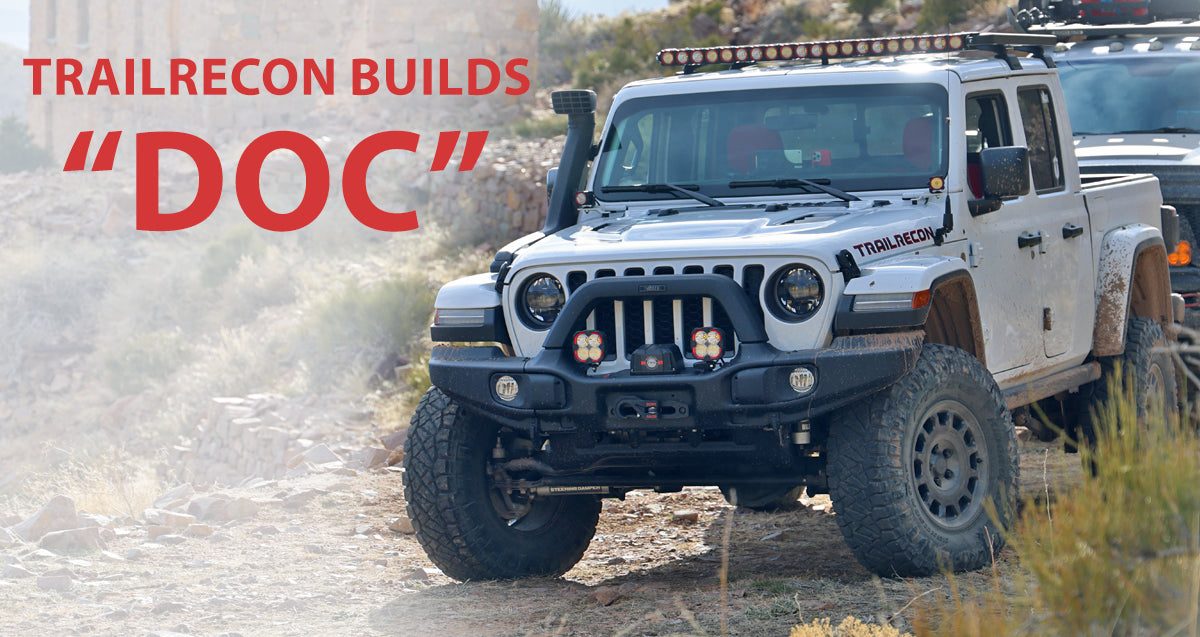
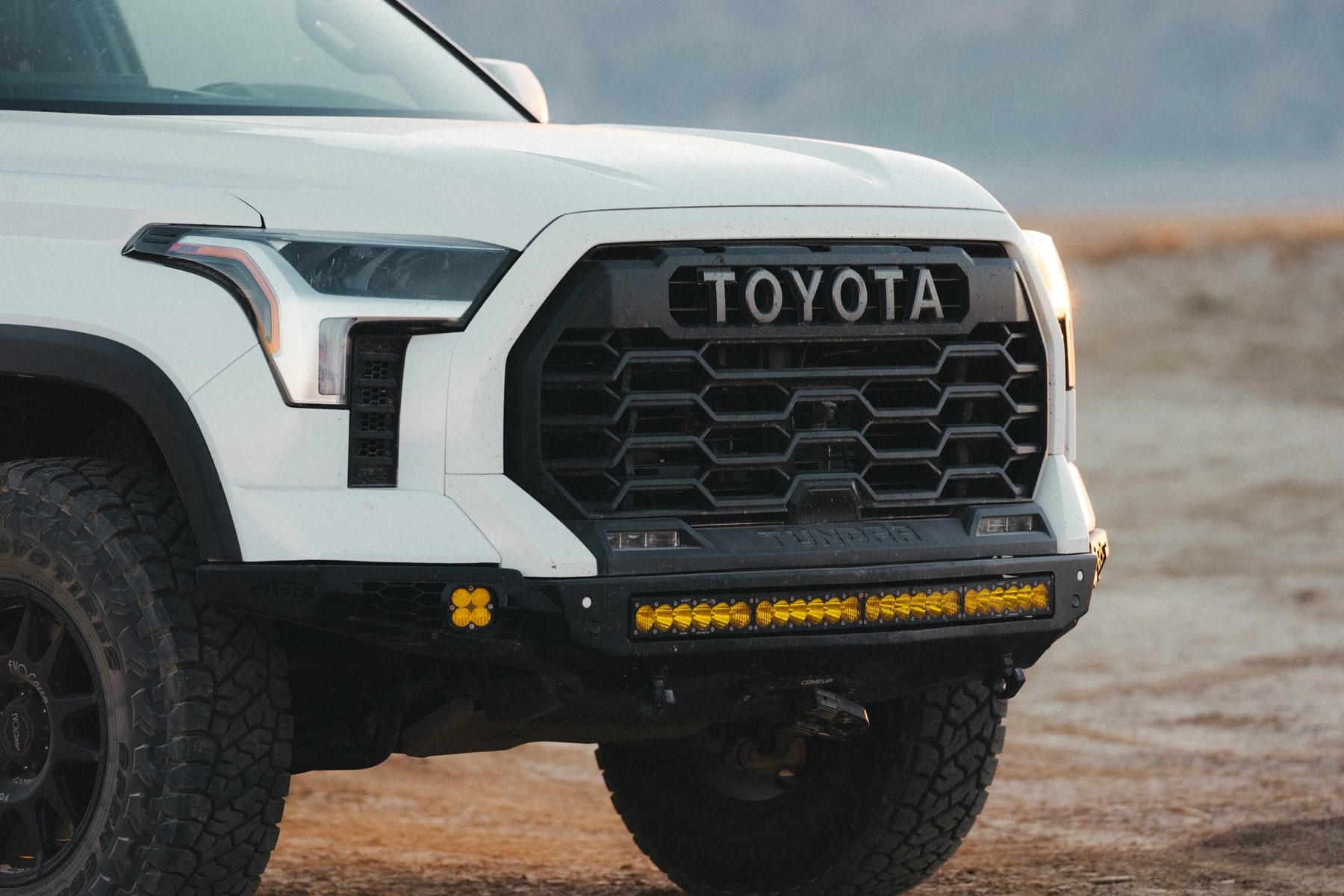
Is it illegal to have a light bar on your truck?
Having one, no. The equipment rules in a state vehicle code apply to what is on the road: California's opens by saying its equipment division applies to all vehicles "when upon the highways". What the codes regulate is which lamps may be lit on a public road, where they may sit, and how many may burn at once. A light bar breaks those rules when it is switched on, or in a few states when it is left uncovered, and not by being bolted to the roof.
There is also no federal ban to find. Federal lighting law, Federal Motor Vehicle Safety Standard 108, sets what a vehicle must have when it is built and says that "no additional lamp, reflective device, or other motor vehicle equipment is permitted to be installed that impairs the effectiveness" of the required lighting. It does not list light bars. NHTSA, which writes the standard, has said so in as many words since 1986: aftermarket lighting that does not replace required equipment "is not itself covered by Standard No. 108, but is subject only to the laws of a State where it will be used." A 2002 letter put the consequence plainly: "any State may regulate these lamps, and their use, as appears appropriate to the State." So the question is always a state question, and the answer changes at a state line.
What does California require?
California writes the rule out more fully than any state we read, in section 24411 of its Vehicle Code. It does not treat a light bar as a driving lamp at all. It treats it as one of up to "eight lamps for use as headlamps while the vehicle is operated or driven off the highway", and attaches four conditions.
| Condition | What the code says | What it means for a bar |
|---|---|---|
| How many | Not more than eight lamps | A bar plus a set of pods is usually inside it |
| Height | At least 16 inches from the ground, and not more than 12 inches above the top of the passenger compartment | A roof bar on a tall rack can be over the limit |
| Position | Anywhere from the front of the vehicle back to a line 40 inches behind the driver's seat | A bar on a bed rack behind the cab can be too far back |
| Wiring | Wired independently of all other lighting circuits | Its own switch, not tied to the headlights |
| On a highway | Covered or hooded with an opaque hood or cover, and turned off | Off is not enough: it has to be covered too |
The height and position limits are the ones people miss. Twelve inches above the cab rules out a bar raised high on a tall roof-rack mount, and the 40-inch line behind the driver rules out a bar fitted to the back of a bed rack or a camper shell. Neither has anything to do with whether the bar is on.
Why can't a light bar count as a driving light?
Because the states that allow road-legal auxiliary lamps allow them only low on the front, and only two of each kind. California permits two auxiliary driving lamps "at a height of not less than 16 inches nor more than 42 inches", which may be lit only with the high beams, and two passing lamps between 24 and 42 inches. Minnesota has the same two driving lamps at the same 16 to 42 inches, and two fog lamps between 12 and 30 inches. A bar above the windshield sits well above 42 inches on any pickup or SUV, so in both states it is outside every category of lamp that may be lit on the road.
A bar in the bumper can sit inside those heights, and that is the closest a bar comes to being a legal driving lamp. It still has to be a lamp built and aimed as a driving lamp, which most bars are not, and it is still more than the two lamps the code allows if it carries dozens of emitters across its width. Our page on ditch lights works through the height windows for lamps on the hood corners, which run into the same problem.
Do light bars need covers?
In California and Minnesota, yes: an opaque cover, on the highway, whether or not the bar is switched on. The other sections we read regulate which lamps are lit, not whether they are covered, so there a dark, switched-off bar is not what the law is aimed at. Covers are cheap, which is why most bars sell with one or have one made for them, and in Google's keyword data "light bar cover" draws about four times the searches of "are light bars illegal".
The cover rule is enforced. In 2017 Roger Wilbanks, a Jeep Wrangler owner in Coronado, California, wrote to his local paper after police stopped him on his way to work "due to my vehicle's off road lights not having covers on them." The officer told him a violation of section 24411 was not correctable and needed a court appearance; the paper later added that the police department's traffic sergeant had confirmed it was a correctable infraction after all, so a fix-it ticket. His other observation is the useful one for anyone deciding whether to bother.
"I have never seen a Jeep on a California highway with covers on the light bar." Roger Wilbanks, after his ticket
That is one driver and one stop, and it says nothing about how often the rule is enforced. What it shows is that the rule is real, that it reaches a dark bar and not only a lit one, and that the officer on the day may not agree with the sergeant about what it costs you.
How many lights can you run at once on the road?
Several states use the same sentence to cap it. Minnesota, Florida and Rhode Island each say that when a vehicle with headlamps also carries auxiliary, spot or other front lamps "projecting a beam of intensity greater than 300 candlepower, not more than a total of four of any such lamps" may be lit at once on a highway. Florida makes a breach a noncriminal infraction, punished as a nonmoving violation.
Three hundred candlepower is roughly 300 candela, which is nothing by modern standards. A single off-road pod is sold on intensity in the tens or hundreds of thousands of candela; our page on spot and flood beams works through one at 161,000. Every auxiliary light a buyer would recognise is over the line, so on a road in those states the count of bright front lamps tops out at four, however they are arranged.
States also have dimming rules, and they apply to whatever you have switched on. California's: within 500 feet of an oncoming vehicle, a driver must aim the light so that "the glaring rays are not projected into the eyes of the oncoming driver", and within 300 feet behind another vehicle must use the low beam. A light bar has no low beam. The only way to dip it is to turn it off.
Is there such a thing as a DOT-approved light bar?
No, because the US government does not approve lighting before it is sold, for light bars or anything else. NHTSA has answered this question for decades, in the words of a 1987 letter to a man asking whether his product was DOT approved: it "does not approve motor vehicles or motor vehicle equipment, nor does it endorse any commercial products." Federal law has the maker do it instead: a manufacturer "shall certify" that its equipment complies with the applicable safety standards, and may show that by a label on the equipment or its box. A DOT mark on a lamp is the maker's own statement. Nobody tested it on the government's behalf before it reached the shelf.
So a bar sold as DOT approved or street legal is making a claim worth reading closely. A claim worth trusting names the lamp type and the standard it meets, a driving lamp to SAE J581 or a fog lamp to J583, and that type then has to be mounted where the state allows it, two at most, at the legal height. A bar that meets a standard is still one more lamp than the code allows if a pair of driving lamps is already on the bumper.
What does a legal setup look like?
It looks the same in most states, because it is built to satisfy the strictest of them. The bar is on its own circuit and its own switch, never tied to the headlights or the high beams, which is what California requires and what makes it impossible to leave on by accident at a junction. It carries an opaque cover that goes on before the truck reaches pavement, which costs little and settles the question in the two states that ask. And it is mounted within the height and position limits, which matters only in California today but is far easier to get right before the rack goes on than after.
If you want extra light on the road, that is a different purchase: a pair of driving lamps built to the driving-lamp standard, low on the front between 16 and 42 inches, wired to come on only with the high beams and to go off when you dip. That is a legal driving light in every state we read. The bar stays what it was bought to be, a light for places where there is nobody coming the other way.
What we do not know
We read the statutes of four states, not fifty. California, Minnesota, Florida and Rhode Island are quoted here from their own legislatures; others use the same four-lamp sentence, and Louisiana is reported to, but we could not read its official text to confirm it. Check the code for the state you drive in, and for the ones on the route.
None of the codes we read says whether a light bar is one lamp or as many lamps as it has emitters. California's eight-lamp limit and the four-lamp cap elsewhere both depend on the answer, and we found no court decision that settles it. Nor did we find an NHTSA letter that addresses light bars by name; the letters quoted here are about other auxiliary lamps, and the agency's principle is general enough to cover a bar, but it has not said so of one. This page covers the United States. It is a reading of the statutes, not legal advice.
Seen on
- The truck built around the worst dayAlmost every overland build is organised around getting somewhere. Brad Kowitz spent 26 years as a Navy corpsman and built a Gladiator organised around what happens after you arrive at a bad scene. Fifteen months later he published a video saying he had it backwards.
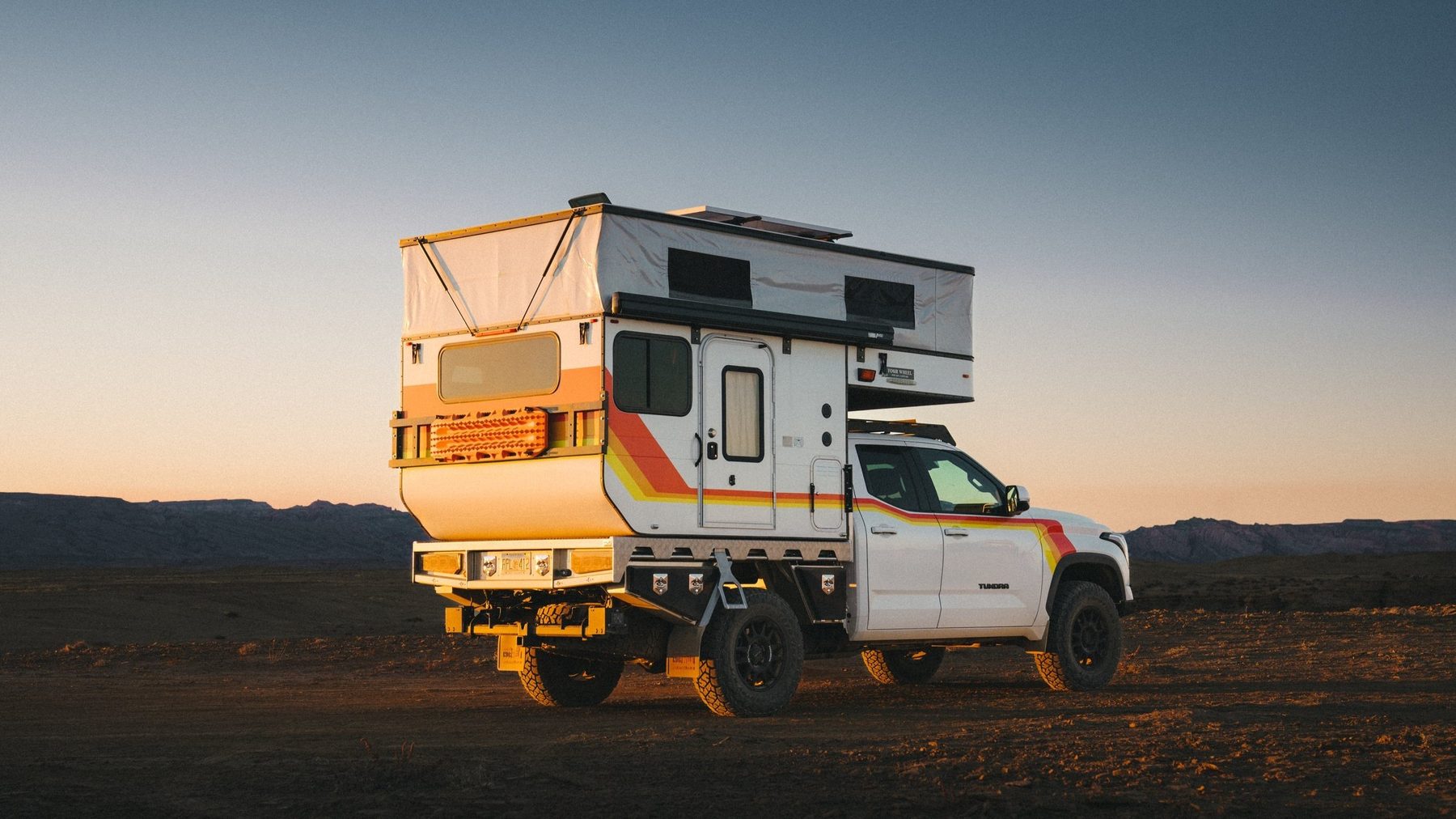
- The cab they made smallerMAK and Owen had the bed cut off a barely broken-in 2023 Tundra and replaced it with an aluminium tray. The choice that explains the rest is quieter: they took the short cab over the big one to keep the camper's weight in front of the rear axle, then deleted the back seats anyway.
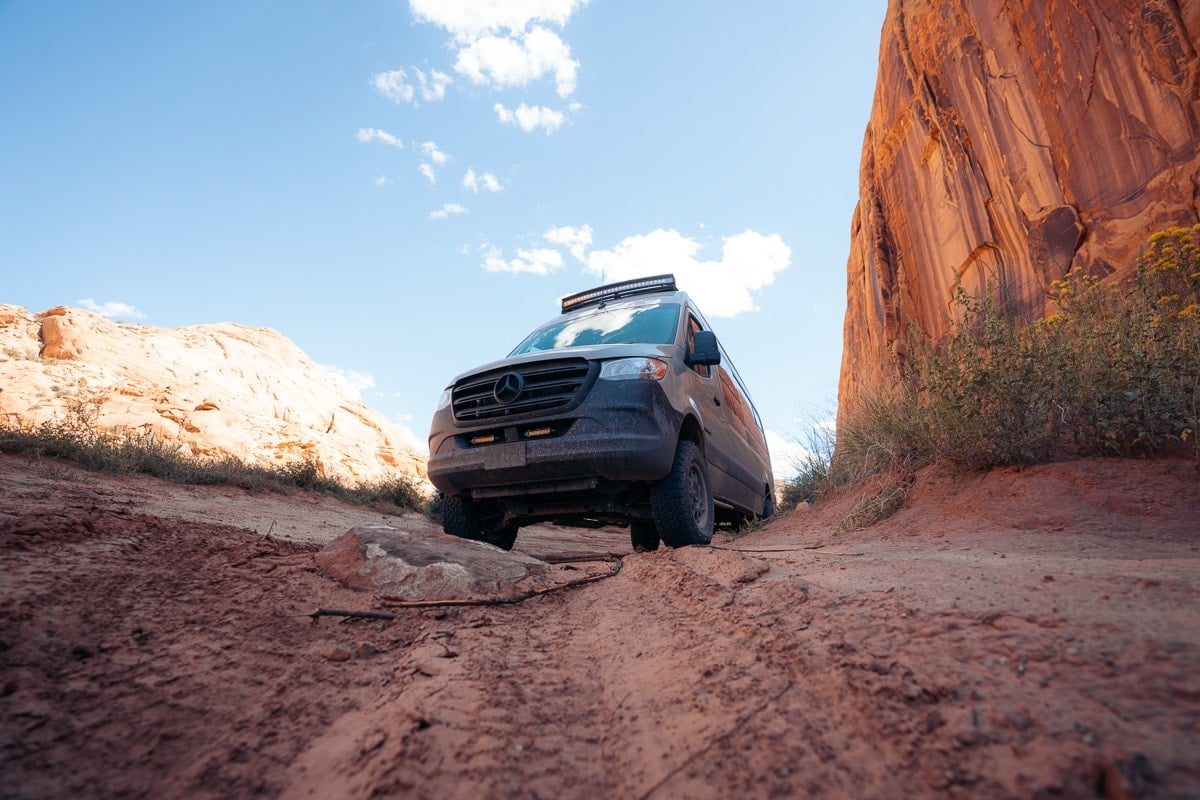
- Three 4x4 Sprinters: the drivetrain was the easy partKristen Bor bought a factory 4x4 Sprinter three times in eight years. The four-wheel drive took her one sentence: snow and rough dirt roads, so it was non-negotiable. The tires, the wheels, the springs, where the water goes and how the family would fit took three vans to get right. Read together, her build pages show where the work in a capable van actually is.
Also in the field guide
Terms on this page
Sources
- California Vehicle Code section 24411, off-highway lamps, California Legislative Information, read 2026-10-13The section that governs a light bar in California. Last amended 1986.
- California Vehicle Code section 24402, auxiliary driving and passing lamps, California Legislative Information, read 2026-10-13
- California Vehicle Code section 24409, use of multiple beams, California Legislative Information, read 2026-10-13
- California Vehicle Code section 24001, application of the equipment division, California Legislative Information, read 2026-10-13The equipment rules apply to vehicles when upon the highways, which is why owning lamps that are illegal to use is not itself the offence.
- Minnesota Statutes 169.56, auxiliary lights, Minnesota Office of the Revisor of Statutes, read 2026-10-132025 statutes. Subdivision 5(b) is the cover rule.
- Minnesota Statutes 169.63, number of lamps permitted, Minnesota Office of the Revisor of Statutes, read 2026-10-13
- Florida Statutes 316.2396, number of driving lamps required or permitted, The Florida Senate, read 2026-10-132025 statutes.
- Rhode Island General Laws 31-24-28, number of driving lamps required or permitted, State of Rhode Island General Assembly, read 2026-10-13
- 49 USC 30115, Certification of compliance, Cornell Law School, Legal Information Institute, read 2026-10-13The manufacturer certifies; no agency approves first.
- Interpretation letter on an auxiliary rear automobile lamp (86-130), National Highway Traffic Safety Administration, read 2026-10-131986, answering a lawyer for a lamp maker. NHTSA says its letters do not have the force of law; they are the agency's reading of its own standard.
- Interpretation letter on road lamps (24524.ztv), National Highway Traffic Safety Administration, read 2026-10-132002, answering a police captain about factory road lamps on an Acura. Cites the impairment clause under its older number, S5.1.3.
- Interpretation letter on auxiliary side lamps (NCC-230420-001), National Highway Traffic Safety Administration, read 2026-10-132023. The current statement of how NHTSA judges whether an added lamp impairs required lighting. About a trailer lamp, not a light bar.
- Interpretation letter on a horn with a light, and whether it is DOT approved (nht87-243), National Highway Traffic Safety Administration, read 2026-10-13
- 49 CFR 571.108, Lamps, reflective devices, and associated equipment, S6.2.1, eCFR, read 2026-10-13
- 49 USC 30122, Making safety devices and elements inoperative, Cornell Law School, Legal Information Institute, read 2026-10-13
- Off Road Lamps Must be Covered for Highway Driving by Roger Wilbanks, The Coronado Times, Letters to the Editor, read 2026-10-13A reader's letter, 17 February 2017, with an update from the paper. One driver's account of one stop, not a survey of enforcement.