
Dust, light, and design logic
Great off-road design, in focus.
We break down real rigs built by real people: what the choices cost, why they were made, and what you can take from them. Every build is credited to whoever built it, and every photograph links back to where they published it.
New
Build note
Higher, further back, and strapped loose: The Rolling Hobo's KTM 690 Enduro R
In 2013 Jussi Hyttinen fitted his KTM 690 Enduro R with side racks chosen for the reason every packing guide gives: they hold the bags low and forward. Five years and tens of thousands of kilometres later he had moved the same bags higher and further back, because hung low they swung, rubbed the side stand and trapped his boot. The rule is right. This build shows where it stops.
Build note
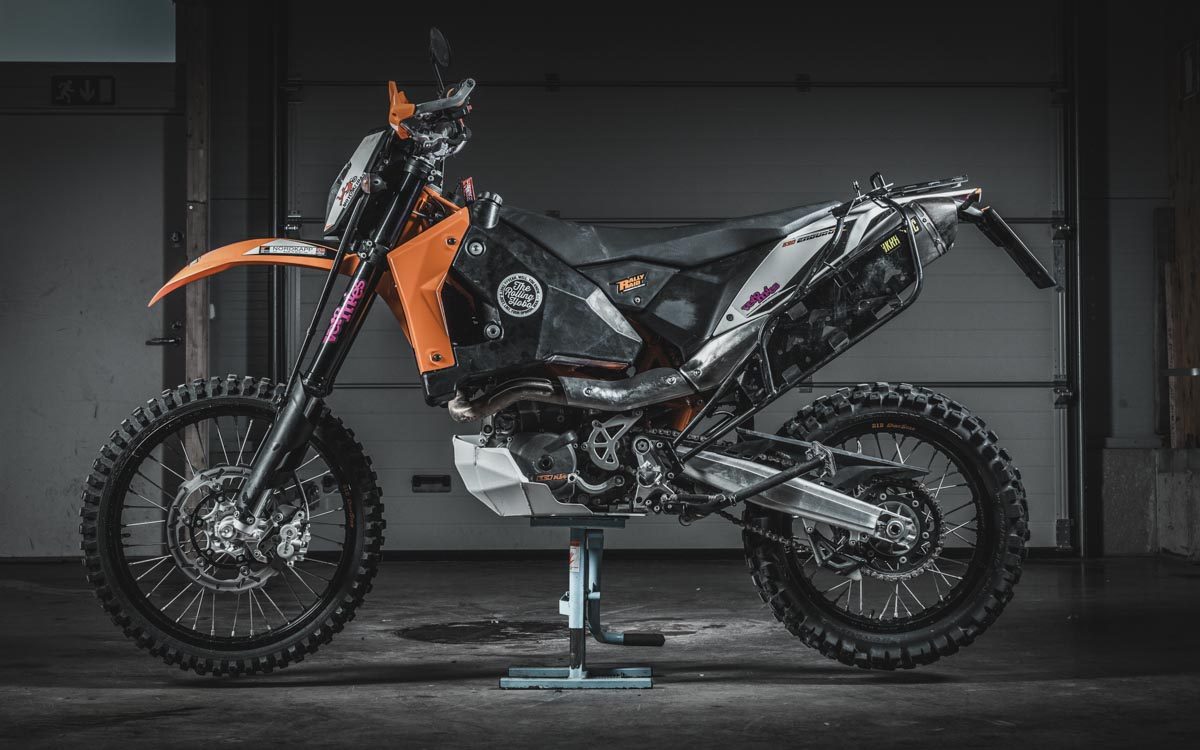
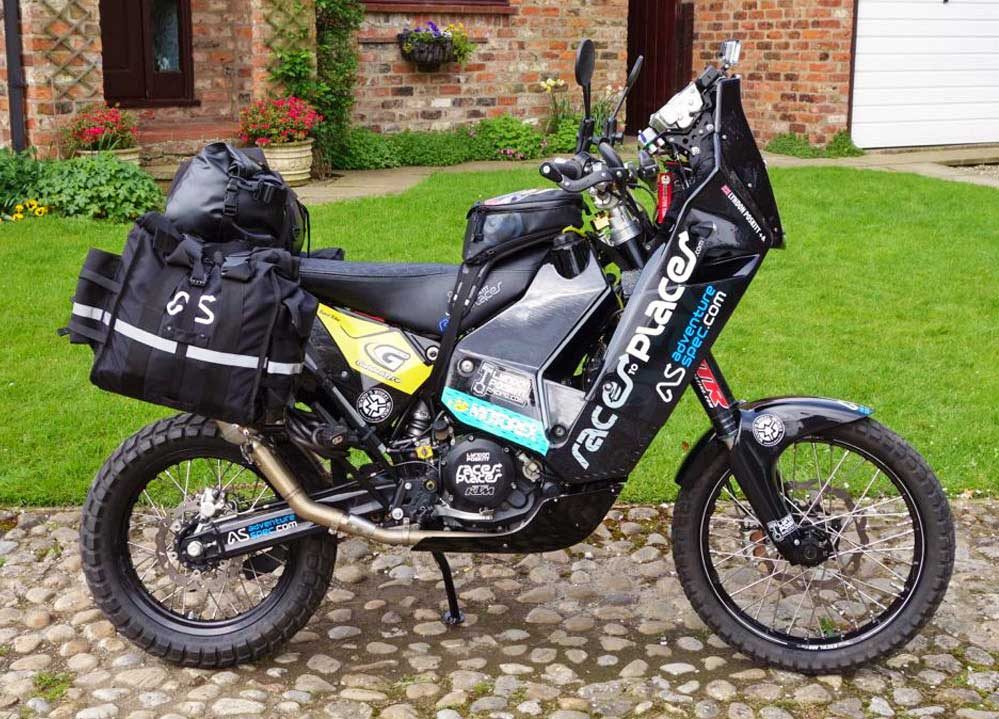
Basil: KTM put the fuel low, Poskitt hung the luggage on it
Most riders who want range on a single-cylinder bike start with a stock machine and bolt tanks on. Lyndon Poskitt started from a Dakar rally bike whose 32 litres were already split between two tanks beside the engine and one under the seat, and made it tour. The fuel layout is KTM's engineering. His own change was to the rear tank, which on this bike is also the subframe, so the part holding half the fuel ended up holding the luggage.
Build note
Too high and top-heavy: Chris Scott's Desert Riders XR650L, and what he would change
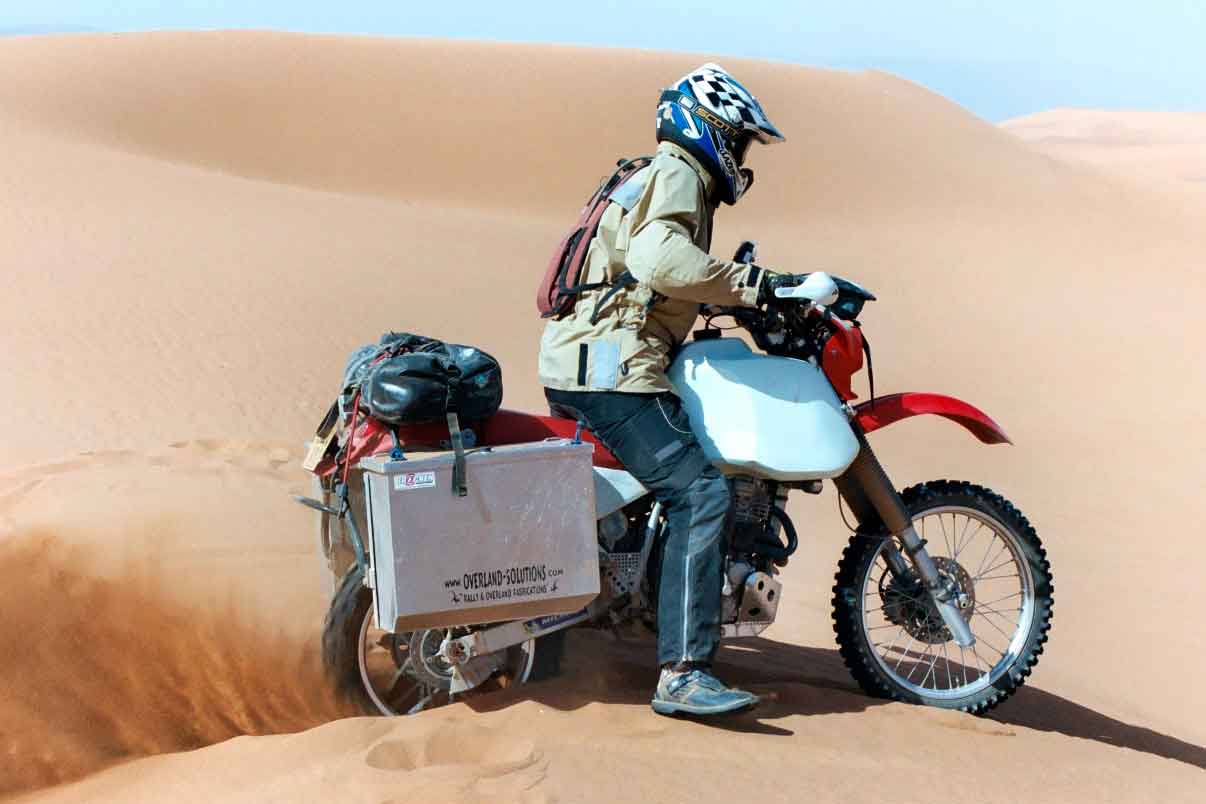
In 2003 Chris Scott and two friends rode three Honda XR650Ls across the central Sahara to the Lost Tree in Niger and back. To get the range, each bike carried a 37-litre tank mounted high above the carburettor, and a steel rack with alloy boxes and jerricans on top. After the trip Scott put "too high and top-heavy" first on his list of dislikes, named the fix, and later wrote the loading rule it taught him. Few builders publish their own correction, and his is a clear lesson in where the weight should go on a motorcycle.
More build notes
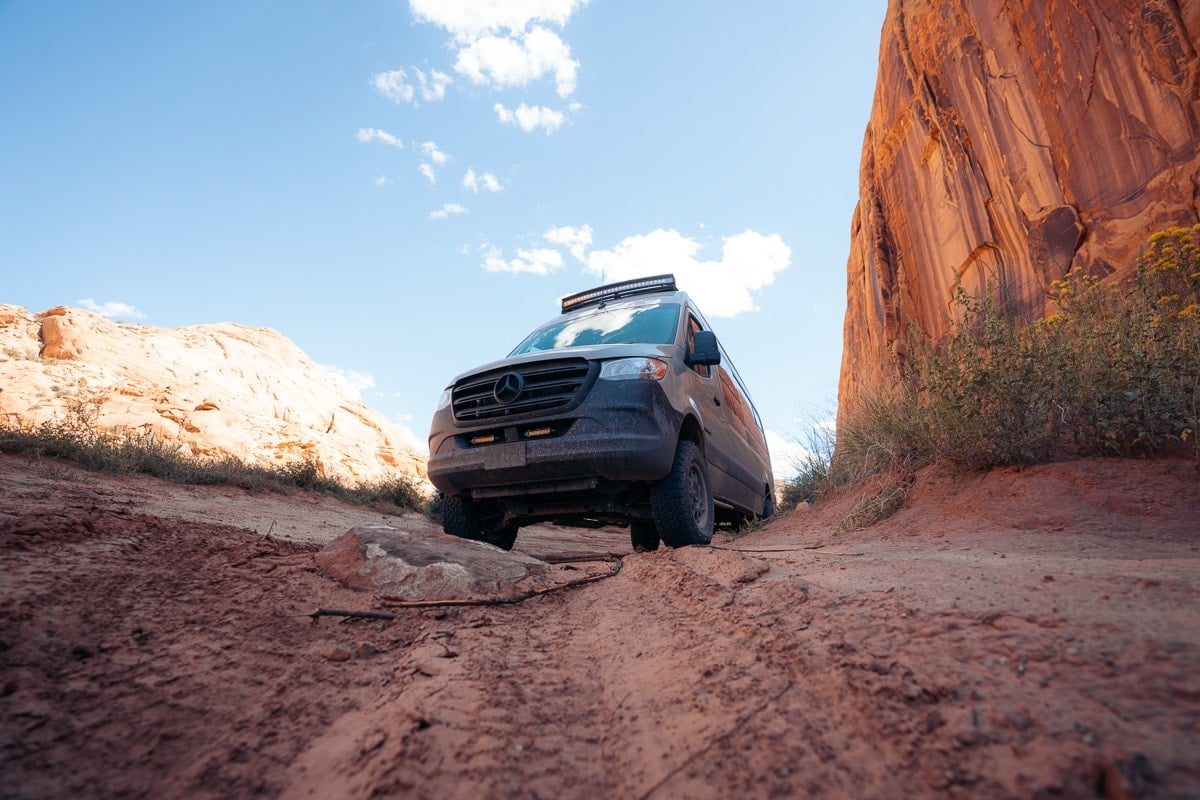
All build notesMercedes-Benz Sprinter 2500 cargo van, factory 4x4, 170in wheelbase, high roof, converted by Outside Van. BFGoodrich KO2 265/70R17 tires on Black Rhino Stadium wheels, Agile Offroad RIP suspension kit.
Three 4x4 Sprinters: the drivetrain was the easy part
Kristen Bor bought a factory 4x4 Sprinter three times in eight years. The four-wheel drive took her one sentence: snow and rough dirt roads, so it was non-negotiable. The tires, the wheels, the springs, where the water goes and how the family would fit took three vans to get right. Read together, her build pages show where the work in a capable van actually is.
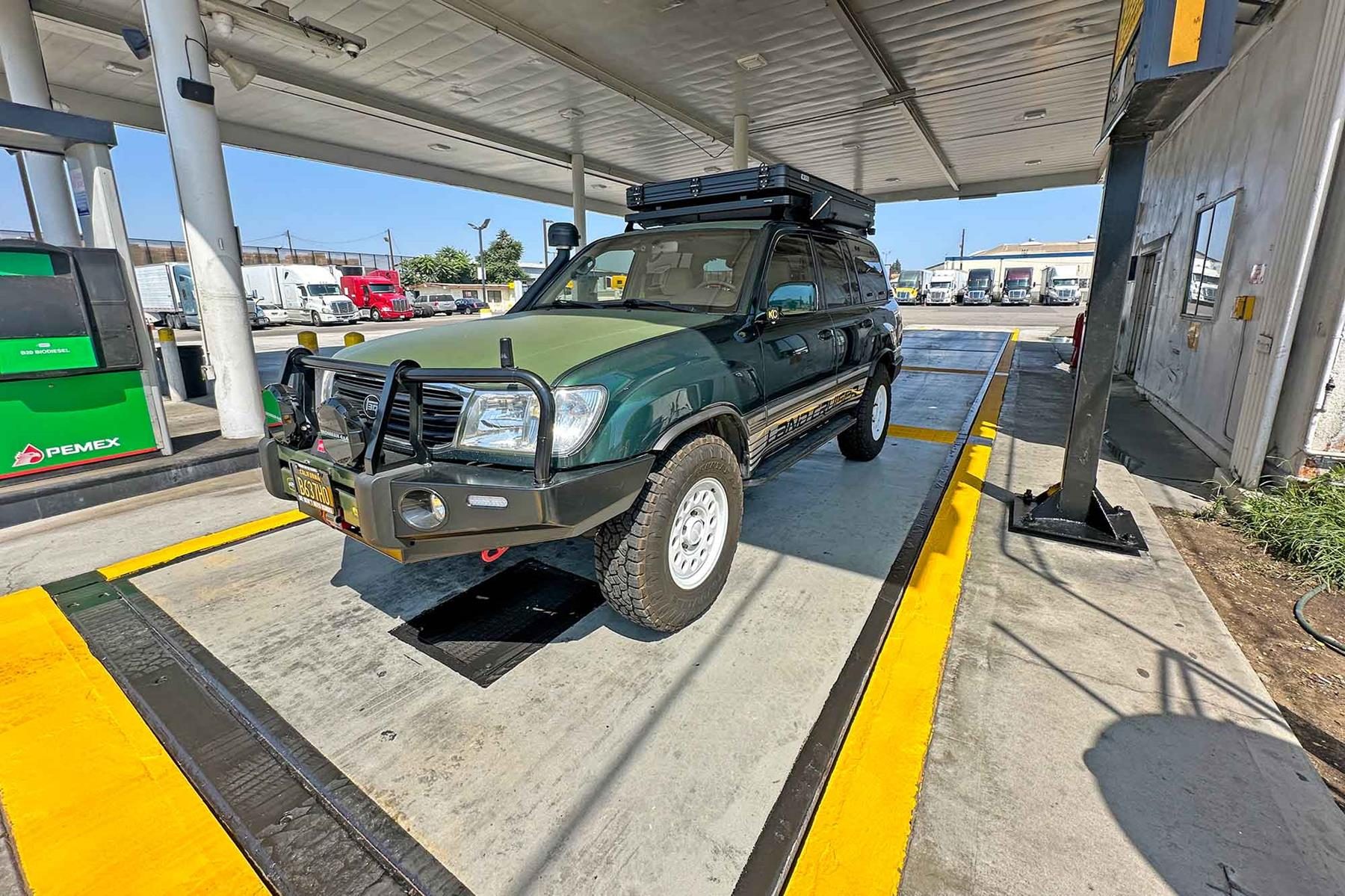
1999 Toyota Land Cruiser 100 Series (UZJ100), 4.7L 2UZ-FE V8, factory centre and rear differential locks, bought as the fourth owner at just under 300,000 miles
The truck that got weighed, twice
A 300,000-mile Land Cruiser under $15,000, a 150 lb tent on the roof, and two public scale tickets eleven months apart showing it over its weight rating both times. What makes this build worth reading is the response: not a stiffer spring, but taking the weight back out.
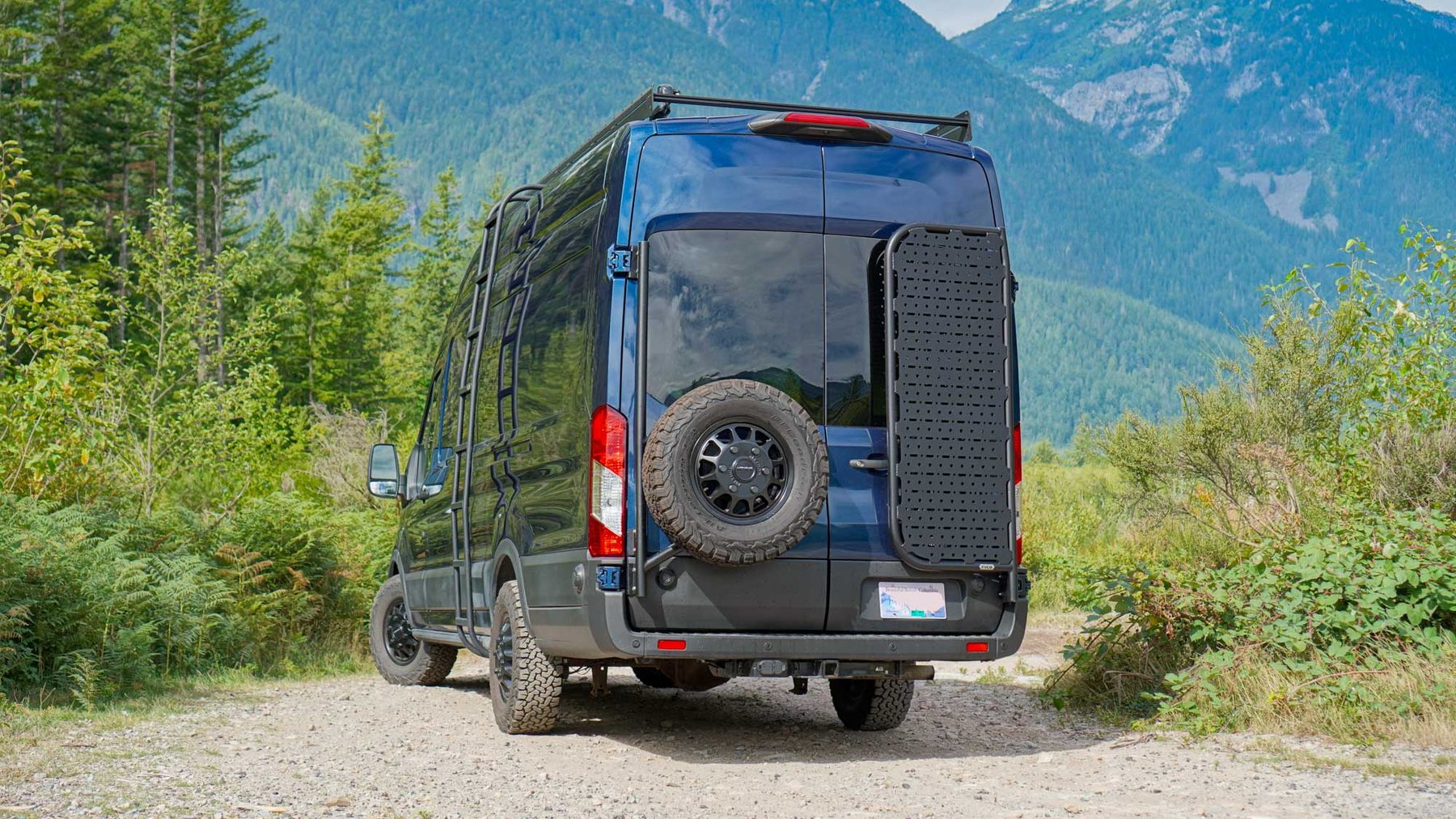
2021 Ford Transit T-350 cargo van, all-wheel drive, 3.5L EcoBoost, 148in wheelbase extended length, high roof, extended-range 31 gallon tank, 9,500 lb GVWR
Buying 500 pounds and losing 30
Two engineers took their own advice and ordered their second Transit with 500 lb more weight rating than the first. They bought all-wheel drive in the same order. The van arrived 530 lb heavier empty, and the second build has 30 fewer pounds of payload than the one it replaced.
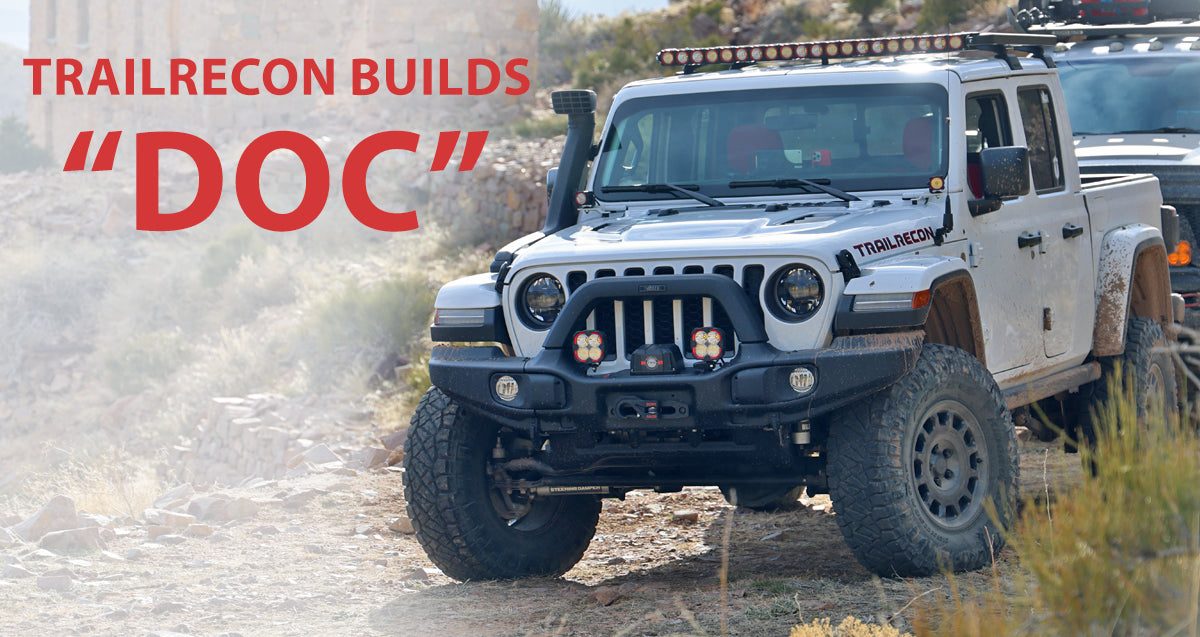
2023 Jeep Gladiator Rubicon (JT), AEV 3in DualSport RT lift, AEV EX Highline front bumper, 37x12.50 Nitto Trail Grapplers on AEV Salta XR wheels, regeared
The truck built around the worst day
Almost every overland build is organised around getting somewhere. Brad Kowitz spent 26 years as a Navy corpsman and built a Gladiator organised around what happens after you arrive at a bad scene. Fifteen months later he published a video saying he had it backwards.
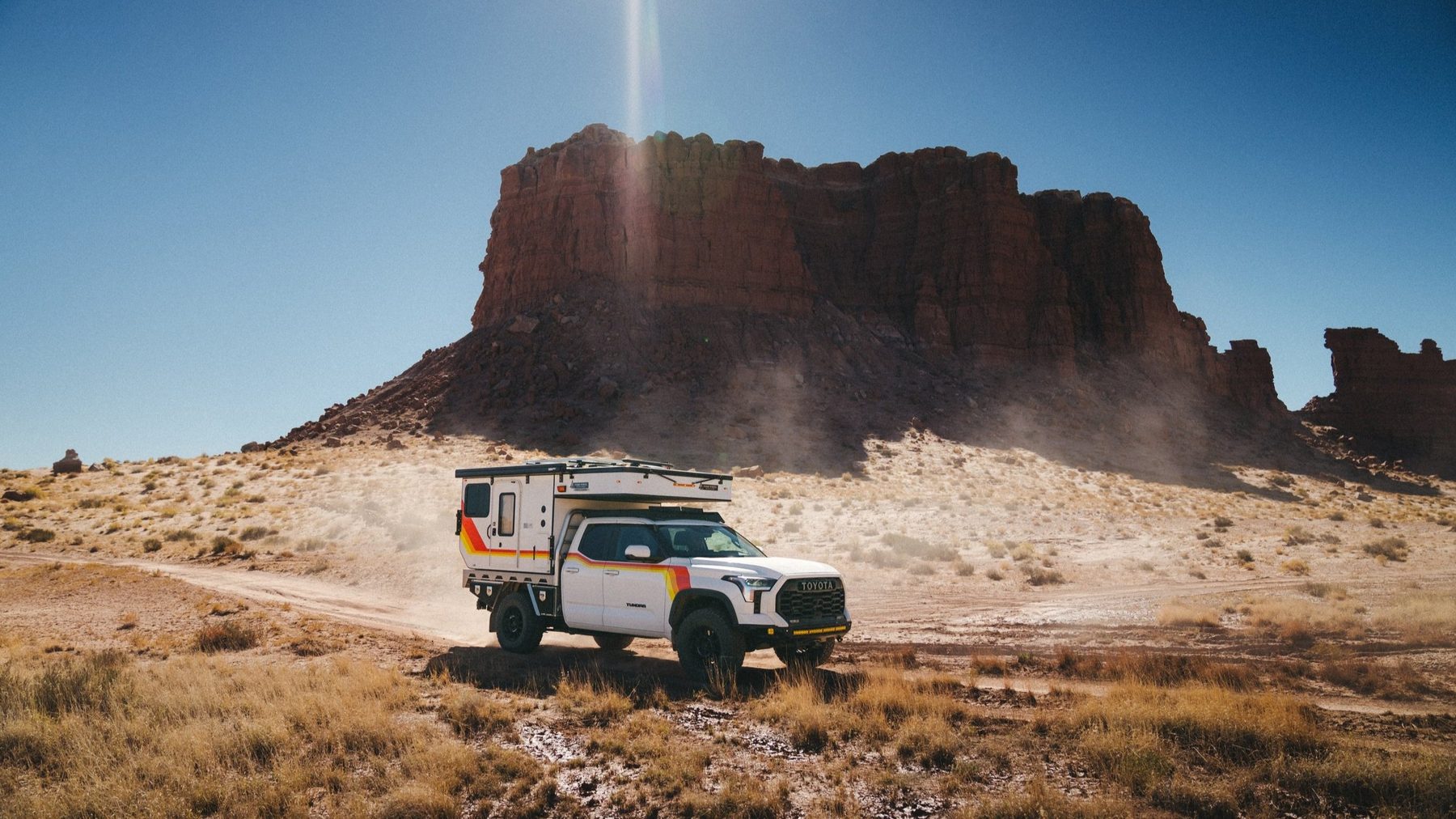
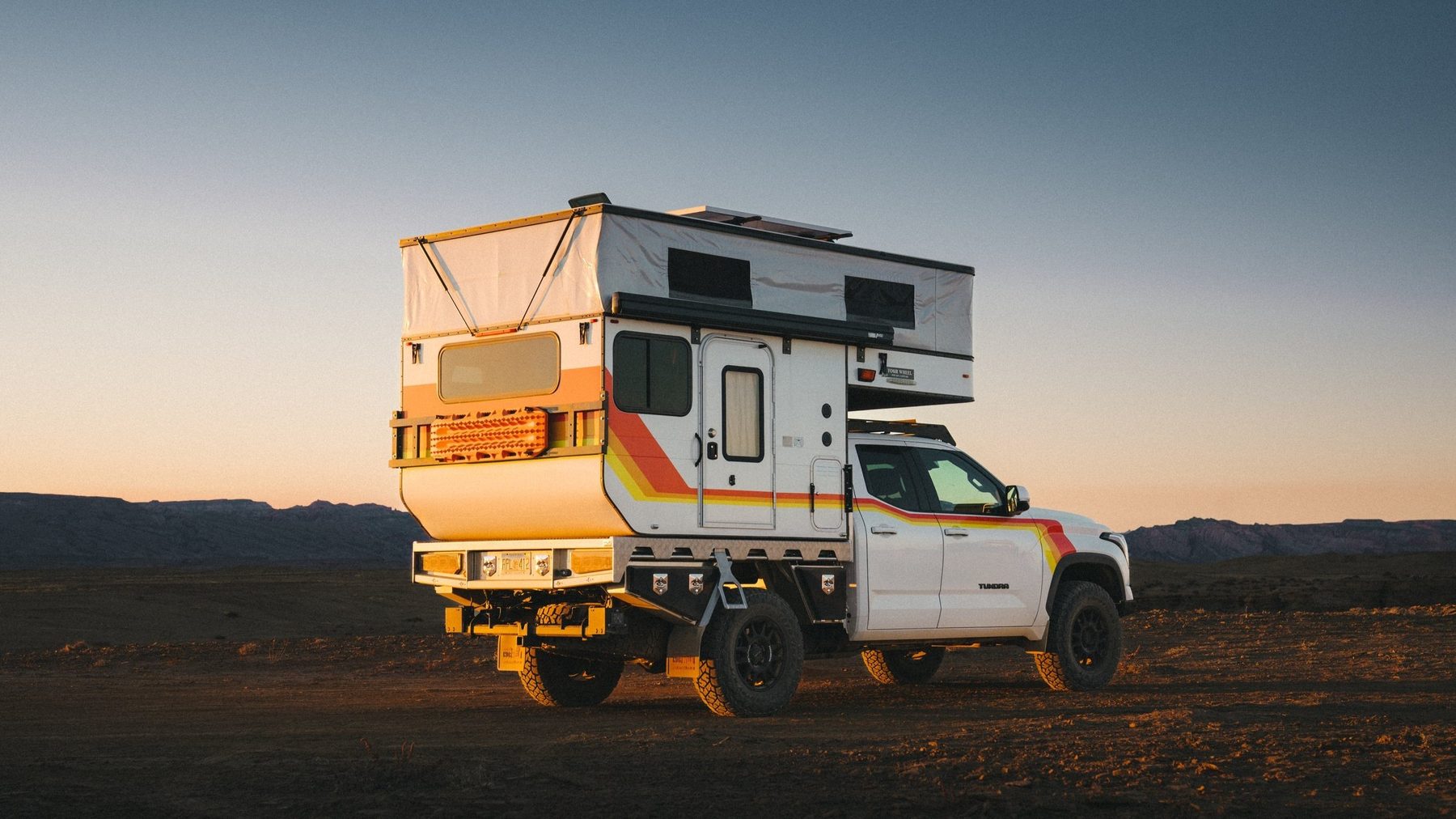
2023 Toyota Tundra TRD Off-Road double cab, i-FORCE MAX 3.4L twin-turbo V6 hybrid, electronic rear locker, extended-range tank
The cab they made smaller
MAK and Owen had the bed cut off a barely broken-in 2023 Tundra and replaced it with an aluminium tray. The choice that explains the rest is quieter: they took the short cab over the big one to keep the camper's weight in front of the rear axle, then deleted the back seats anyway.
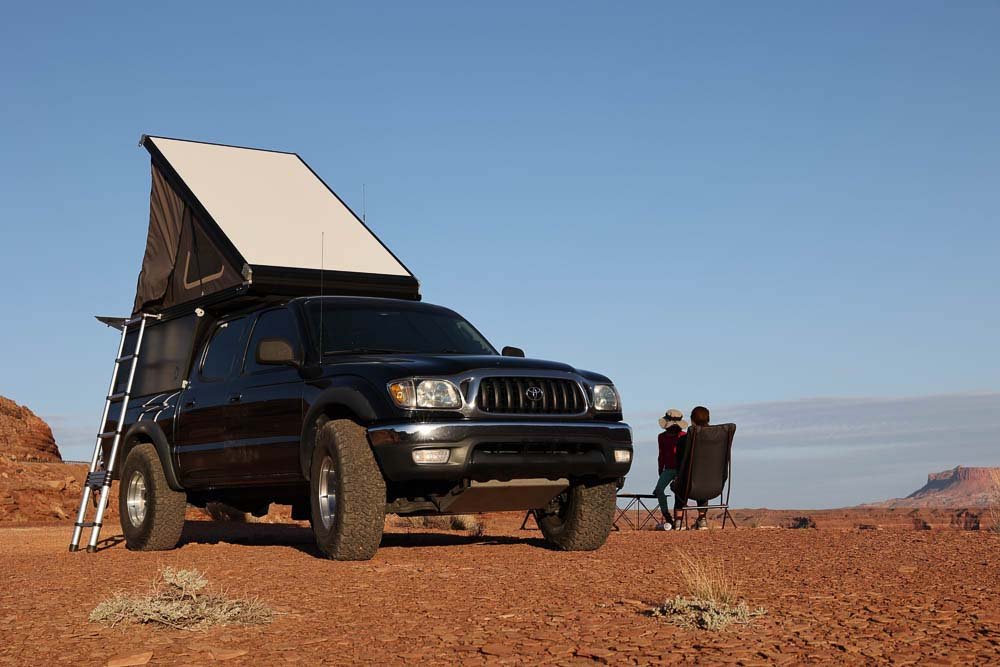
2004 Toyota Tacoma Double Cab TRD Limited, 3.4L V6, 4WD, automatic
The lights that stayed low
Patrick of Take The Truck had a free, easy place to mount a pair of Baja Designs LP9 Pros, high on the front of his camper. He turned it down over glare in bad weather and spent an afternoon making brackets instead. A first-generation Tacoma built by someone who writes down what his decisions cost.
Field guide
All questions- Where should the weight go on an adventure motorcycle?
- AWD vs 4WD: what is the difference, and which do you need?
- Cybertruck vs Rivian off-road: what happens when a computer controls the power?
- Should you put your truck camper on a flatbed?
- What are ditch lights for, and how should you aim them?
- Spot beam or flood beam: which off-road light do you need?
- What is GVWR, and how do you know if you are over it?
- How much weight can your roof carry?
57 terms, in plain words
Nobody is born knowing what a departure angle is. Terms as we use them, without the gatekeeping. Start here: