
Buying 500 pounds and losing 30
Two engineers took their own advice and ordered their second Transit with 500 lb more weight rating than the first. They bought all-wheel drive in the same order. The van arrived 530 lb heavier empty, and the second build has 30 fewer pounds of payload than the one it replaced.
Built by Antoine Gagne (FarOutRide) and Isabelle Richard (FarOutRide)
By Chad Sig · Published
2021 Ford Transit T-350 cargo van, all-wheel drive, 3.5L EcoBoost, 148in wheelbase extended length, high roof, extended-range 31 gallon tank, 9,500 lb GVWR
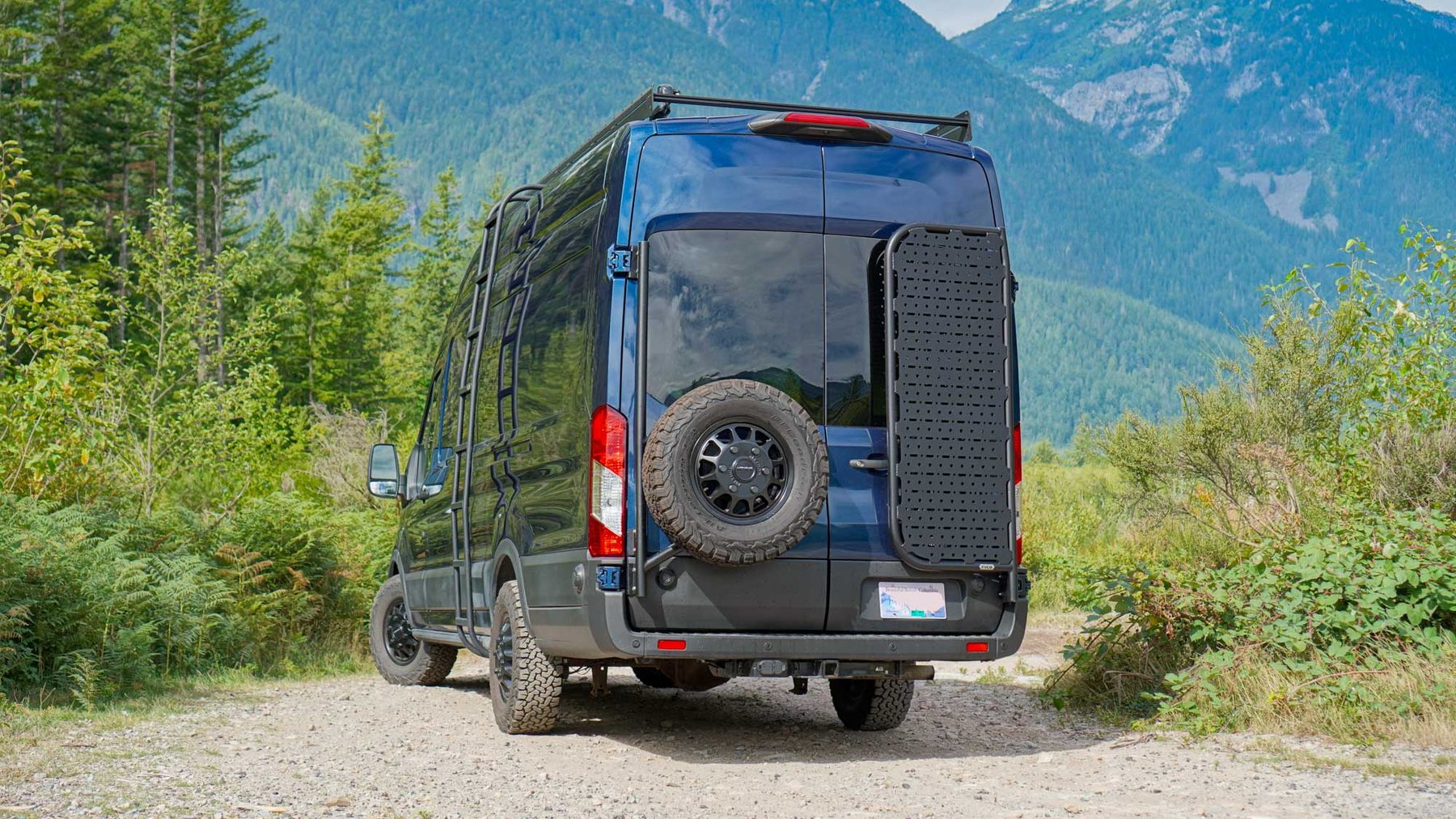
What it is designed for
Capacity bought at the order desk
The payload decision is made before the van exists, in the options list, and it is the only point in the process where it can be made cheaply.
Mass at floor level
The heavy items are the floor, the battery cabinet and the water, and all three sit as low as the vehicle allows. The rule is stated on their own weight page before the build follows it.
Measured rather than estimated
A curb weight from a public scale rather than a spec sheet, which is the difference between knowing your payload and guessing it.
A record that can be checked
A budget published before the build, a weight after it, and an itemised repair log. Each is a claim with a method attached.
What it gets right
Plenty of builders say weight matters. What makes this one worth reading is that Antoine Gagne and Isabelle Richard published a payload budget by category before the conversion, spent it down in public, and then drove onto a scale. Both are engineers, he an aerospace one, and the build reads like a mass budget because that is what it is.
In Antoine Gagne (FarOutRide)’s own account
- They frame conversion weight as a safety problem rather than a legal one, and name what it damages.
“Weight added by a van conversion affects safety, performance and handling of the vehicle and improper management can put you (and others) at risk and shorten the life of the vehicle and its components.”
Source - The builder's job, stated as an obligation rather than a suggestion, and stated against both ratings rather than just the headline one.
“Your role as a DIY builder is to make sure to stay within range of the vehicle weight ratings (GVWR, GAWR).”
Source - The placement rule, stated as the governing principle before any of the cabinetry exists.
“The holy grail of safety, performance & handling for any vehicle design is to keep the vertical CG as low as possible.”
Source - And the comparison that makes the rule actionable, with their own examples on each side of it.
“Weight added higher (e.g. roof rack, overhead storage, ceiling material) has much more impact than weight added at floor level (e.g. battery bank, water tank, etc.).”
Source - The instruction they give readers at the end of the weight page.
“Once your van conversion is completed, take it to a scale and measure your GVW and GAW (front & rear). Make sure they are under the weight ratings (GVWR, GAWR).”
Source - The sentence a suspension vendor would never write, published on the page where they install the kit and link to it.
“Air suspension kit, or any other aftermarket suspension kit for that matter, does NOT increase the GVWR (Gross Vehicle Weight Rating) of your vehicle. In other words, it does not add payload capacity.”
Source - What the air bags do buy, in the same breath, so the point is not read as an argument against fitting them.
“The air bags increase the rear suspension stiffness which restores the sag, reduces sway, and improves the overall handling of the van.”
Source - The spare-tire swap, with its stated reason. Access and space, not mass.
“provides easier access to the spare tire, and frees up space underneath the van (e.g. to add a water tank instead)”
Source - The rating underneath the axle rating, and the one a size change can quietly lower.
“when in doubt, select new tires with a load index no lower than the factory tires”
Source - Why the mass-budget framing is not a stretch: this is how one of them was trained to think.
“graduated as an aerospace mechanical engineer and worked for Bombardier Aerospace for several years”
Source
Dirtbeam’s reading
Not stated by the builder. This is what we take the build to show.
- The headline arithmetic is ours, and it is two tables one page apart on their own site. Van 1: 9,000 lb of rating against 5,500 lb of curb weight is 3,500 lb of payload. Van 2: 9,500 lb of rating against a measured 6,030 lb is 3,470 lb. They bought 500 lb more rating and got 30 fewer pounds to load, because all-wheel drive, the EcoBoost and the extended-range tank took 530 lb of it first. Nobody on the site draws that line, and it is the cleanest demonstration we have found that a rating is a certificate rather than a capacity.
- Buying the bigger rating was still right, which is the part that makes the arithmetic interesting rather than damning. Without it the same van would be 470 lb worse off, not 30. The lesson is not that the upgrade failed; it is that a rating and a payload are two numbers, and the options that raise one usually spend the other in the same conversation.
- Van 1's margin was never a margin. Its three published rows, 5,500 plus 1,800 plus 1,700, sum to exactly 9,000, which is the rating, while the total underneath reads 8,950. All three components are round hundreds and the total is not, so the components are rounded. Either way, at the end of a careful conversion by two engineers, the gap between the budget and the ceiling was smaller than the rounding in the numbers producing it.
- The stated placement rule and the actual van agree, item by item, which is rarer than the rule being stated. The 325 lb electrical system is in a cabinet at floor level. The floor is 200 lb and is the floor. The main 33 gallon fresh tank sits down in the wheel well. Most writing about keeping the centre of gravity low is not accompanied by a floor plan that does it.
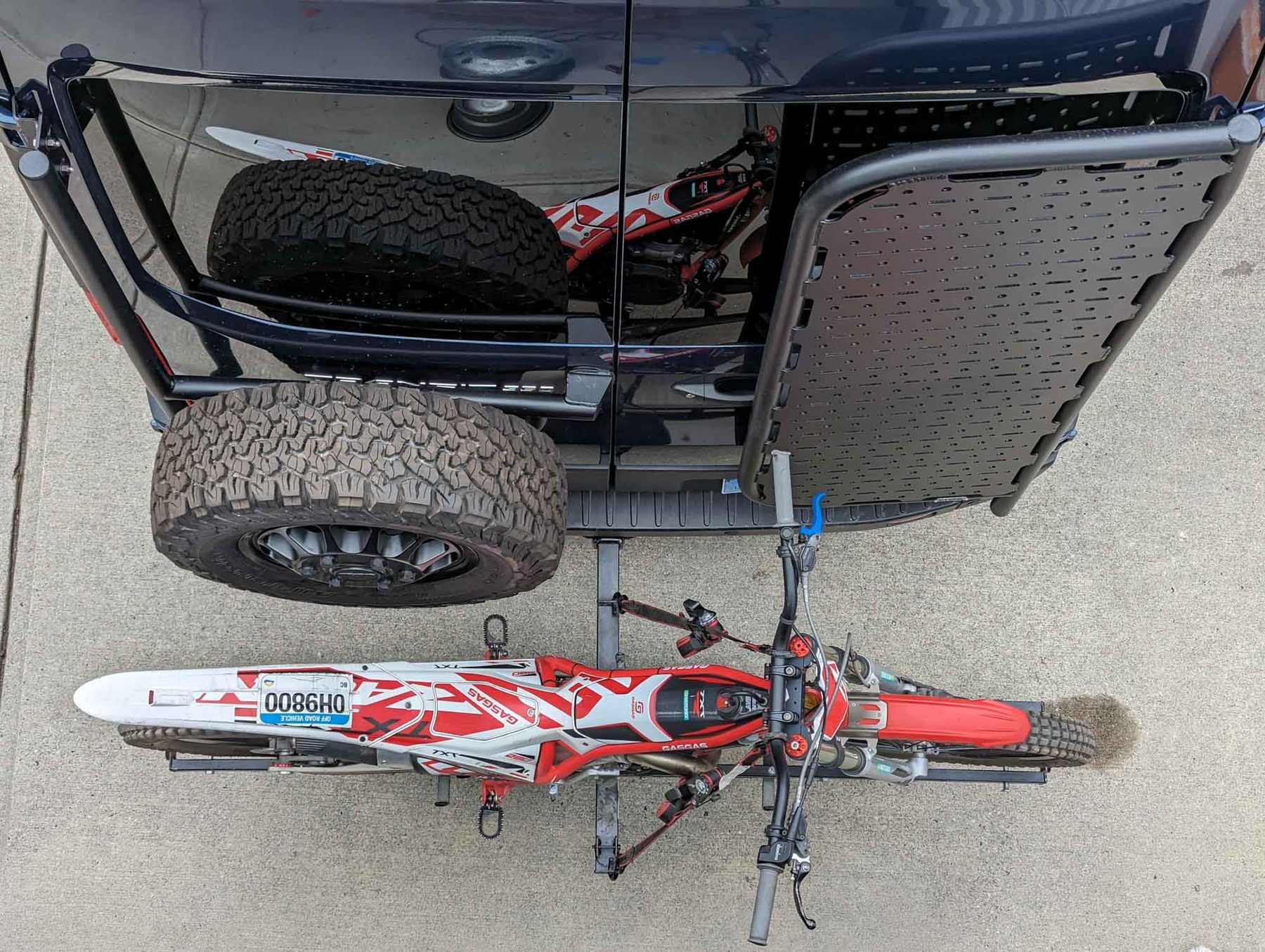
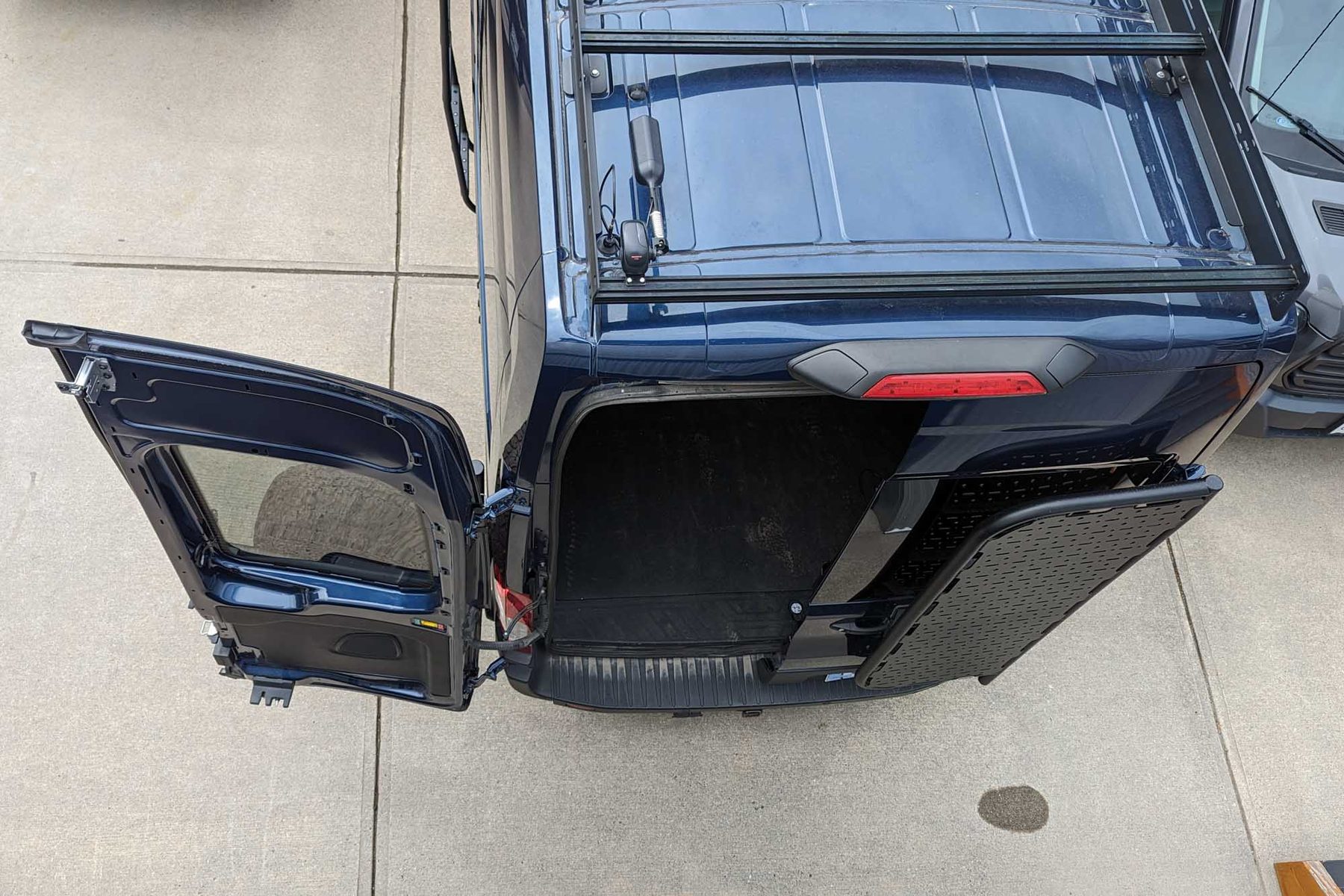
- The real exposure on this van is the rear axle, and it is the one number nobody has. The electrical cabinet is at the back on the driver's side, the 24 gallon tank sits under the rear where the spare used to be, and the doors carry about 70 lb of platform, bike rack and tire carrier before a bike or a spare wheel is hung on them. Van 2's own two axle ratings, 4,630 lb front and 5,660 lb rear, add to 10,290 against a 9,500 lb vehicle rating. That 790 lb looks like slack and is not: it is the room the vehicle leaves you to be legal on the total and over on one axle, which is exactly what a load concentrated at the back does.
- The spare-tire swap is a weight decision made for non-weight reasons, which is the most common kind. Stated reason: easier access and freed space. Consequence, ours: about 200 lb of water moved into the lowest position on the vehicle, which serves the stated rule, while a wheel and tire moved from under the floor to the back door, which works against it. One decision, both directions, and the net is not published.
- Water is the largest variable mass on the van and it appears in no parts list. Thirty-three and twenty-four gallons of fresh is about 475 lb full and nothing empty, and the grey tank adds more when it is not. That swing is roughly a seventh of the entire payload budget, and it changes between every fill and every dump. It is the concrete reason weigh it the way you travel is not pedantry.
- The repair log is what turns their platform argument into something checkable. Chose it for reliability and cheap parts is the least falsifiable sentence in this hobby. An itemised unscheduled-repair total across nearly 96,000 miles, with scheduled maintenance explicitly excluded, is the same claim with a method attached, and the method is the contribution.
What it gives up
The sharpest limit on this build is one the builder states himself, in a comment reply, and it is the same limit almost every careful build runs into: the measurement that was easy to take and the measurement that mattered were not the same measurement.
In Antoine Gagne (FarOutRide)’s own account
- A reader on the weight page reports the exact failure this layout is exposed to, and asks the obvious question. This is the reader's data, not FarOutRide's.
“Hi, I have a similar build, and fully loaded with gear my rear axle weight exceeded the RGAWR BY ~200lbs. How did your build come in for rear axle weight?”
Source - Antoine's answer. A published weight page, an instruction to measure both axles, and the axle figure is the one that does not exist.
“We could only do total weight, so I'm not sure about the rear axle. But I'm curious about it now, I will try to find a scale and update this page!”
Source - What they gave up to start this, which is also why the record exists in the detail it does.
“we sold our house (and everything in it), quit our engineering careers, and moved into our self-built campervan”
Source
Dirtbeam’s reading
Not stated by the builder. This is what we take the build to show.
- The second conversion is nowhere near counted, and the note has to be read as a method rather than a result. Its published breakdown totals about 1,125 lb with the water system, the kitchen cabinets, the walls, the ceiling and the storage still blank or marked with a question mark. The total row on that table reads Wait for it. If the finished conversion lands near van 1's 1,800 lb, the cargo budget comes out within noise of van 1's again, which would make the 500 lb of extra rating a wash twice over.
- The air bags cost 80 lb of the payload they explicitly do not increase. That is the rule they state, applied to their own van, and it is worth saying out loud because most readers believe the opposite about air suspension. Eighty pounds spent on how the load rides rather than on how much of it there is.
- The roof carries a second budget that no GVWR arithmetic touches, and it is nearly spent before anything is stowed. On their reading of Ford's manual the dynamic limit for this van is 200 lb; the rack is about 70 lb and the solar about 60. Roof weight is also the worst weight on the vehicle by their own stated rule, which is the tension in every van with a rack on it, theirs included.
- Their all-wheel-drive position and their purchase disagree, and they say so themselves: the order guide argues that four-wheel or all-wheel drive is not mandatory, and then they bought it. That is not hypocrisy, it is the ordinary shape of a decision made with money on the table, and it happens to be the decision that spent the 500 lb.
- The monetisation runs deep and mostly points the right way. The site sells plans, files and parts, carries affiliate links throughout, and takes Patreon and donations, all disclosed. The four decisions this note leans on have nothing to sell, and two of them cut against a sale: air bags do not add capacity, and buy the rating rather than the suspension.
The kit
- Lighting
- Not the subject of this build, and worth saying rather than padding. No auxiliary lighting is visible in the photographs we are using, and none of the sources we verified documents an interior or exterior lighting choice, so this note makes no claims about either.
- Storage
- Organised around where mass sits rather than how much fits. The heavy items are low: the battery cabinet at floor level, the main 33 gallon fresh tank down in the wheel well, and a second 24 gallon tank in the hole under the van where the spare used to live. What went up and back instead is the spare wheel, now on a door carrier, alongside a cargo platform on the other door and a hitch rack below. About 70 lb of that hardware is mounted before anything is loaded onto it.
- Recovery
- Also not documented in what we verified, which is itself consistent with the build: this is a road-and-forest-service-road van rather than a trail rig, and the all-wheel drive was bought for winter access rather than for obstacles. The relevant safety margin here is not a winch, it is the load index of the tires, and their own tire page is unusually direct that a size change can quietly buy a lower one.