
The truck that got weighed, twice
A 300,000-mile Land Cruiser under $15,000, a 150 lb tent on the roof, and two public scale tickets eleven months apart showing it over its weight rating both times. What makes this build worth reading is the response: not a stiffer spring, but taking the weight back out.
Built by Jerry Tsai (OVR)
Built by Al Catolos (Sponsored by Wifey)
By Chad Sig · Published
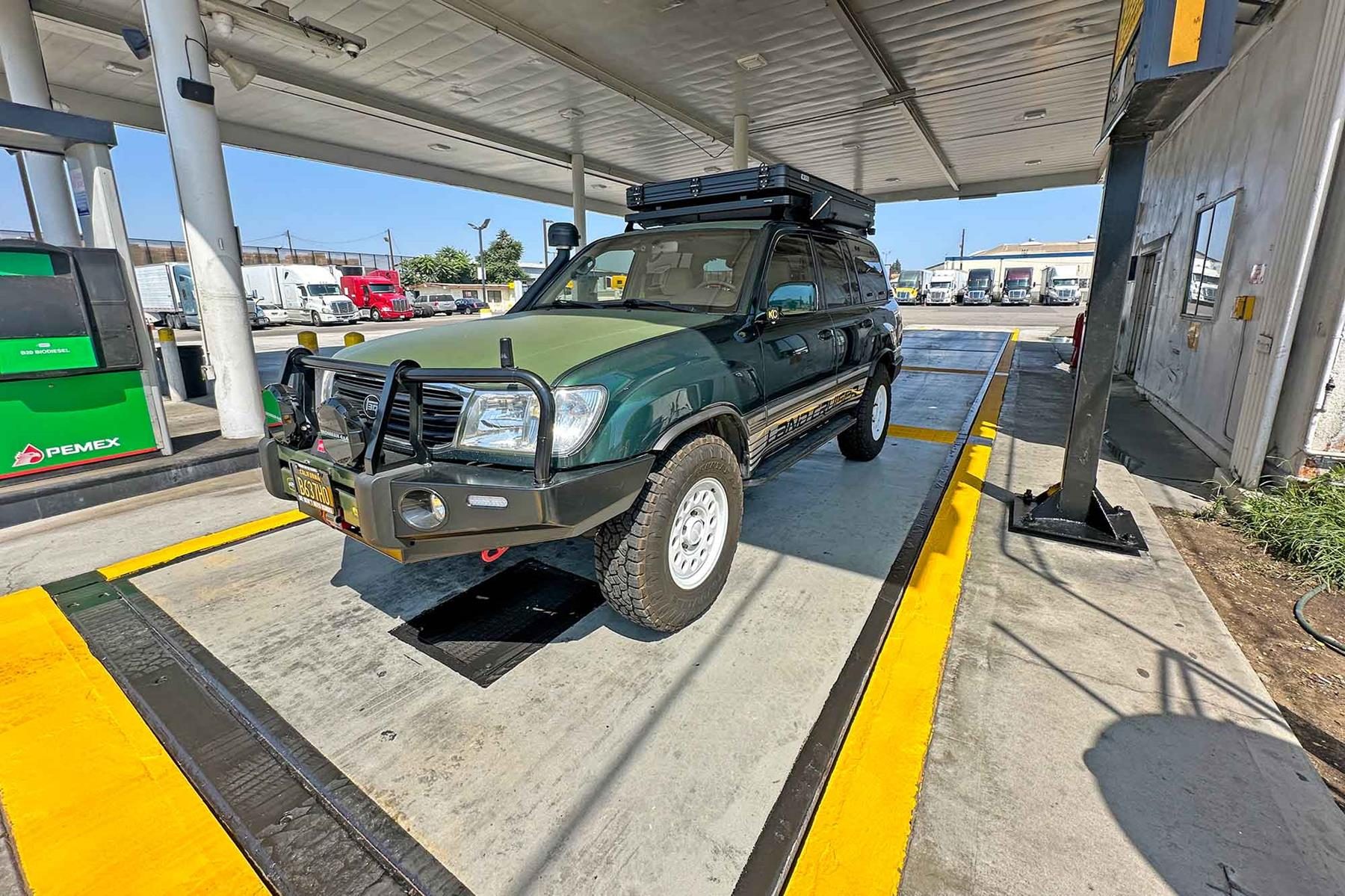
1999 Toyota Land Cruiser 100 Series (UZJ100), 4.7L 2UZ-FE V8, factory centre and rear differential locks, bought as the fourth owner at just under 300,000 miles
What it is designed for
A budget set before a spec
Buy outright, no payment, under fifteen thousand dollars. That constraint chose a 300,000-mile Land Cruiser over a new mid-size truck, and everything after it is downstream of that.
Cargo instead of seats
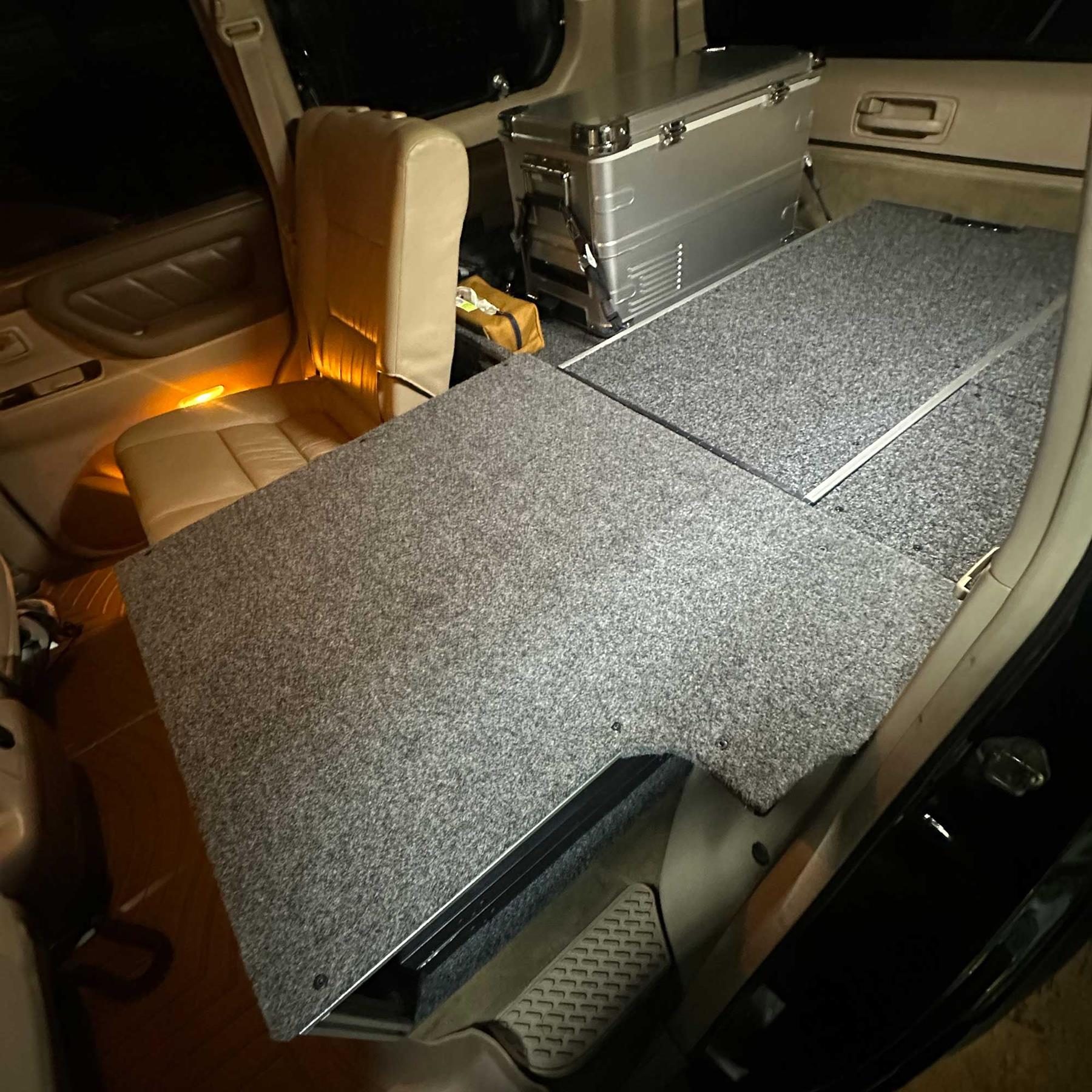
Most of the second row eventually came out for a flat deck, a battery bay and a sleeping surface, with one seat section kept as a hedge.
Numbers rather than feel
Two CAT Scale tickets, published, on a truck that turned out to be over its rating both times.
Subtraction as a fix
When the scale said too heavy, the answer was a smaller fridge and an emptier drawer rather than a bigger spring.
What it gets right
Almost nobody publishes what their overland build weighs, because the number is usually embarrassing. Jerry Tsai published his twice, in a magazine that sells advertising to the brands bolted to the truck, and then published what he did about it. The build is ordinary; the record is not.
In Jerry Tsai (OVR)’s own account
- The tent is named as the thing that moved the number, with its weight, in his own accounting of what changed.
“An Overland Vehicle Systems rooftop tent, which clocks in at over 150 pounds plus mounts.”
Source - The first reading, in August 2024, taken loaded the way the truck actually travels: gear aboard, a passenger, a full tank. The typo is the magazine's own.
“Tiping the scales at 7,020 pounds, our OVR LC100 project vehicle is 160 pounds over its 6,860-pound GVWR”
Source - The second reading, eleven months later, and this one deliberately stripped. Stating the conditions is what makes a weight worth anything.
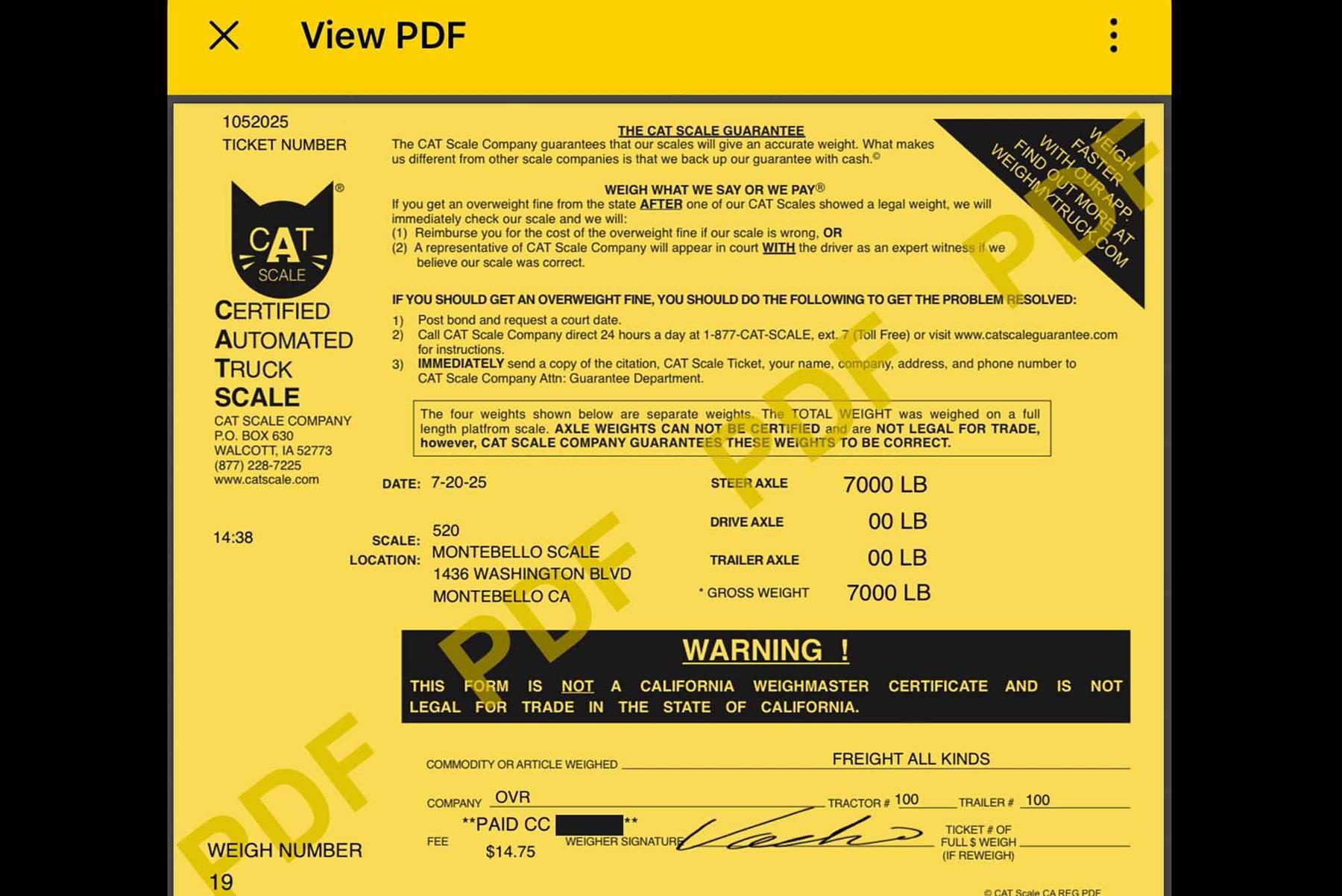
“With 3/4 of a tank of gas and the driver (me) in the seat, the scale read 7,000 pounds even.”
Source - He stripped the truck first and says so, which means the figure is a baseline rather than a worst case.
“Before we hit the scale, we stripped out anything we didn't consider part of our standard loadout.”
Source - And the rating it is measured against, from the manufacturer.
“Toyota lists the LC100's GVWR at 6,860 pounds.”
Source - The conclusion he draws in print, about his own magazine's project vehicle. The sentence continues past this point to note it is before gear, water and supplies.
“That means we're already 275 pounds over GVWR with two people and a full tank of gas”
Source - The response, stated as a deliberate offset rather than a discovery.
“we knew we were adding significant weight with the rooftop tent, so we offset that by ditching part of the rear seats and rethinking what we actually need to bring on trips”
Source - What came out, item by item. The fridge is the telling one.
“We downsized from a 53L Dometic fridge to a 35L Iceco model.”
Source - The seats decision, and the admission that it was somebody else's idea first.
“After resisting advice from fellow overlanders, we removed the rear seats in favor of a cargo platform with integrated storage and a significantly upgraded house electrical system.”
Source - He now gives the advice he refused, and marks the condition under which it does not apply, which is the part most build advice leaves out.
“if you mostly travel solo or as a pair, our advice now matches what we were told at the beginning: start with a cargo platform layout from day one”
Source - And the plainest version of it, in his own words about the whole rebuild.
“we made the modifications we should have done from the beginning”
Source
Dirtbeam’s reading
Not stated by the builder. This is what we take the build to show.
- The sequence is the story, and reading the series as a run is what makes it visible. A spring was chosen, then a tent went on, then a scale ticket said the truck was over its rating, then weight came back out, then the space that opened up became the platform. Each article stands alone as a product write-up. Together they are one continuous argument about payload that nobody on the site ever labels as such.
- Subtraction is the rare answer, and it is the reason this build earns a note. The ordinary response to a scale ticket is a heavier spring, an air bag or a shrug about ratings being conservative. A spring changes how the load rides and leaves the rating exactly where it was. Taking out a row of seats and eighteen litres of fridge changes the number the scale reads. Only one of those is a fix for being overweight.
- The fridge swap is the most instructive line in the whole series, because it is the one nobody would applaud. Downsizing a fridge is a real loss of capability on a long trip, accepted for weight. That is what a payload budget looks like when it actually binds, as opposed to when it is written down and then ignored.
- The tent is not the villain and framing it that way would miss the point. It is the item that made an already spent budget visible. The truck was near its limit before the tent went on; the tent is simply what pushed it far enough over that a scale ticket was worth publishing.
- Keeping one 70/30 seat section is a hedge worth naming, because it is what separates this from a purely dogmatic conversion. Cargo won, but not so completely that a third person can never ride. The build states its own condition, solo or as a pair, and equips for it without closing the other door entirely.
- The scale ticket shows a gross weight and no axle split, and the reason is in the article's own caption: both axles were placed within the first pad. That is the right procedure for a vehicle without a trailer, and it means a public truck scale gives an owner a total and nothing about distribution. FarOutRide's Transit has exactly the same gap for exactly the same reason. Two of the most weight-conscious builds we have covered both know what they weigh and neither knows what sits on the back axle.
What it gives up
The costs here are unusually well documented because the builder kept publishing after the flattering part was over. The largest one is that the truck is still over its rating, by his own arithmetic, in its stripped state.
In Jerry Tsai (OVR)’s own account
- What being over costs, in his own words, and notably not framed as a legal problem.
“the extra weight puts more strain on your suspension, brakes, and tires”
Source - The seats came out for a platform that did not exist yet, so the truck spent a period with neither.
“Most of the second-row seats are now gone to make space for a sleeping platform (still to be installed).”
Source - He names who the layout does not suit, which is the caveat most conversion advice omits.
“If you travel with family or regularly bring along multiple passengers, a platform setup may not make sense.”
Source - The next measurement is promised rather than taken, and at the time of writing it has not appeared.
“We'll weigh the LC100 again after the sleeping platform goes in.”
Source
Dirtbeam’s reading
Not stated by the builder. This is what we take the build to show.
- Every figure past the 7,000 lb reading is arithmetic, not measurement. The dry weight of about 6,700 lb, the 6,850 lb with a full tank and the 7,135 lb wet are all derived from one ticket by subtracting and adding estimated masses. That is reasonable practice and it is not the same as weighing, and the difference matters on a page about knowing your numbers.
- The 115 lb net increase is a comparison between two different states rather than a controlled result. The first weigh was loaded as the truck actually travelled, with a passenger and a full tank; the second was deliberately stripped to a baseline. The gear that came out and the gear that went in both moved between those two tickets, so the figure describes a direction rather than a measured delta.
- Subtraction has a floor, and this build has reached it. Seats, fridge volume and unused drawer contents were the cheap weight; what remains is the tent, the batteries, the drawers, the bumper and the truck itself. Getting under 6,860 lb from here would mean giving up something the build exists for, which is the position most finished overland vehicles are in and most never find out.
- The 1999 platform is doing quiet work in the weight story that the series never connects. A 300,000-mile truck bought for under fifteen thousand dollars buys its capability in parts hung onto an old vehicle, and every one of those parts is mass added to a curb weight that was already set in 1999. A newer, more expensive vehicle would have arrived with more rating and more capability built in.
- Worth disclosing because it is not obvious from the page: the man who built the platform, Al Catolos, is the same person the article credits with giving the seats-out advice at the start of the build, and OVR has separately run a feature on his own truck. None of that makes the platform wrong, and the reciprocity is not hidden, but a reader deserves to know the adviser became the fabricator.
The kit
- Lighting
- A KC light on the bull bar is visible in the scale photographs, and the series does not document a lighting argument, so this note does not make one. The electrical system that would run it is documented and substantial: a Redarc 2000W inverter and a BCDC ALPHA50 R charger, feeding a pair of 300Ah lithium house batteries that replaced a 48Ah AGM setup.
- Storage
- The whole point of the build in its current form. Most of the second row is gone, replaced by a fabricated aluminium platform with a battery bay beneath it, L-track along the front edge, a sleeping surface for one inside the truck, and a cubby at the tailgate for the things wanted first. One 70/30 seat section stayed. An ARB drawer system underneath it survived the rebuild, minus everything the purge removed.
- Recovery
- Factory centre and rear differential locks, which is the reason a 100 Series is worth buying at 300,000 miles rather than a cheaper wagon, and a front bumper with recovery points. The series does not publish a recovery kit inventory, so this note does not itemise one.