
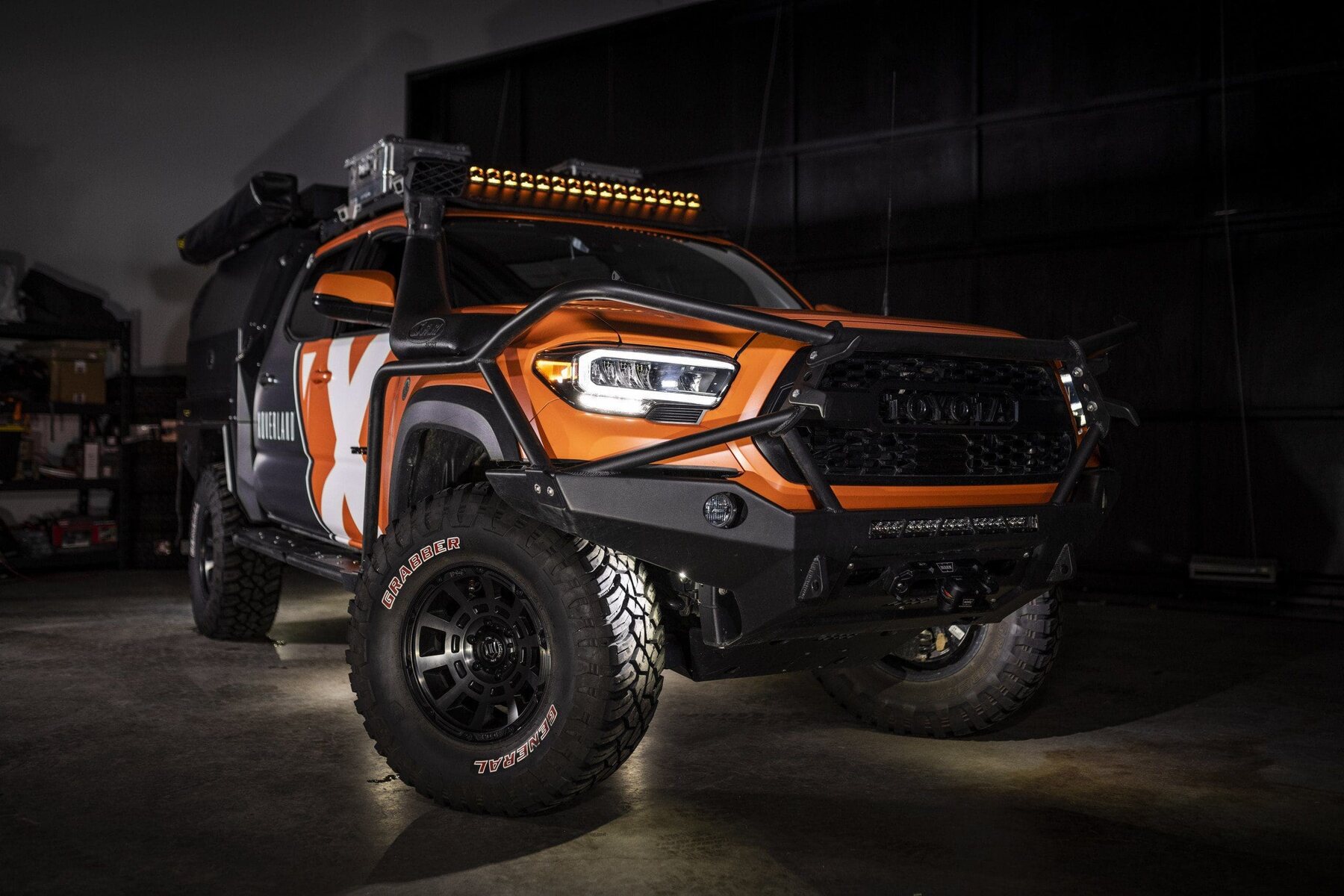
Toyota Tacoma (3rd gen)
The Dusk Runner
A mid-size overland Tacoma built for long desert nights, where the lighting does more work than the lift.
- Region
- High desert, Southwest US
- Build
- 2024 build
- Use
- Weekend overland + dispersed camping
Figure 01
The build, annotated.
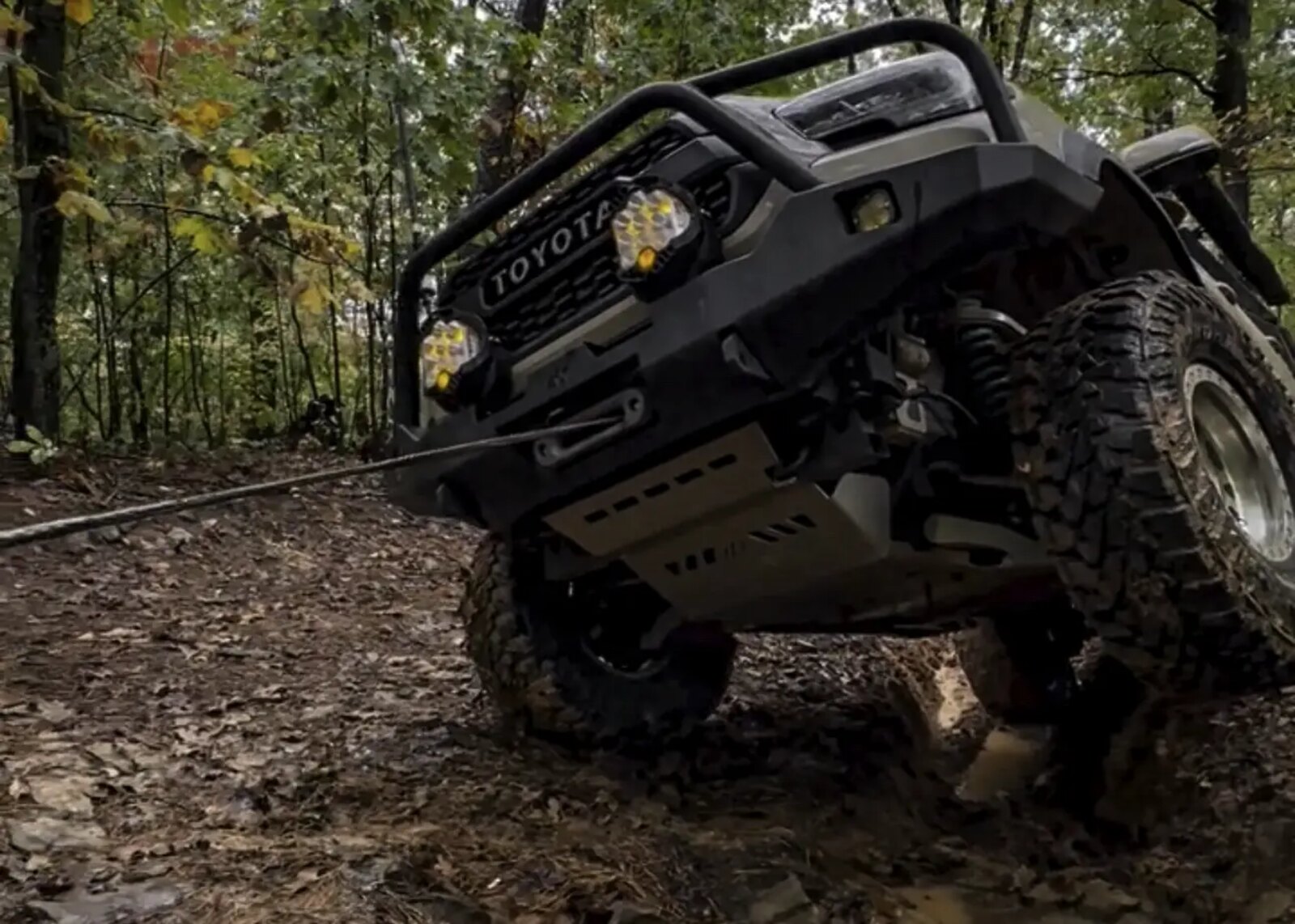 FIG. 01 · SIDE PROFILE
- 01Low-mounted fogsBelow the dust line, so the beam under-lights the cloud instead of bouncing back into your eyes.
- 02Roof weight, rearwardLoad kept behind the B-pillar to protect front grip and turn-in.
- 03Recovery point, clearRated, reachable, and unobstructed by the bumper or steps.
- 04Amber for dustWarm output scatters less in airborne dust and snow than cool white.
Field Note
From the trail.
We caught this Tacoma an hour after sunset, still ticking as it cooled, lit almost entirely by its own hardware. That is the honest test of an off-road build: not how it photographs at a show, but how it reads at night, covered in the day's dust, when every choice either helps you or gets in your way.
The lighting does the heavy lifting
Most builds this size over-invest in suspension and under-invest in seeing. This one flips it. The fogs sit low and run amber, which sounds like a styling call and is actually a physics one: warm light scatters less off airborne dust, so the beam lands on the trail instead of hanging in the air in front of you.
The roof bar is the trophy. The low amber fogs are the tool.
The roof bar is wired on its own circuit and, per the owner, stays off nine nights out of ten. Mounted where it is, a hair too far forward, it throws just enough spill into the driver's near field to wash out depth. Four inches rearward and it would be a non-issue.
Storage you can use with your boots on
The bed is a single drawer. No tower, no wings, no drop-down fridge slide fighting for the same cubic feet. Recovery boards ride on top, the sleep system stays made underneath, and nothing has to come out to reach anything else. It is the least Instagram-friendly storage setup we saw all season and one of the most usable.
What we'd change
Two things. Move the roof bar rearward to get it out of the near field. And drop the winch a full size: it is heavier than this truck's realistic recovery load, and that weight lives in the worst possible place for approach angle and steering feel. Reclaim it and the whole front end wakes up.
The Breakdown
Seven ways to read this build.
What works
- +Amber-forward aux lighting tuned for dust, not for photos
- +Bed drawer keeps recovery gear reachable without breaking camp
- +Weight carried low and rearward, so the front stays planted
What's overbuilt
- !Full skid package for terrain this rig will rarely see
- !A winch that outmatches the truck's realistic recovery load
Lighting setup
A low-mounted amber fog pair cuts dust glare; the roof bar is wired on a separate circuit and stays off on trail. Spot pattern reserved for open desert, flood for camp.
Storage setup
Single bed drawer, no drop-down, no wing kit. Recovery boards and a kit live on top; sleep system stays untouched underneath. You can reach the winch controller without unpacking.
Recovery setup
Rated recovery points front and rear, both reachable with a strap already routed. Traction boards mount outboard so they clear the tailgate swing.
Design tradeoffs
- !Chose fog placement over ground clearance at the front valance
- !Traded roof storage volume for a lower center of gravity
What we'd change
- !Move the roof bar 4 inches rearward to keep it out of the driver's near field
- !Swap the winch for a lighter unit and reclaim the tongue weight
Working on something like this?
Tell us the rig, the terrain, and the problem. We’ll help you spend the next dollar where it counts.
Get Help With a Build